

Choose horseshoe material by the required product result
Steel and Aluminum Horseshoes for Wholesale Sourcing
Compare materials alongside the shoe design your customers need. Steel and aluminum ranges differ in their available patterns, sections, weights and finishes. Start with the intended range and approved reference, then review the material and model together instead of choosing on material name alone.
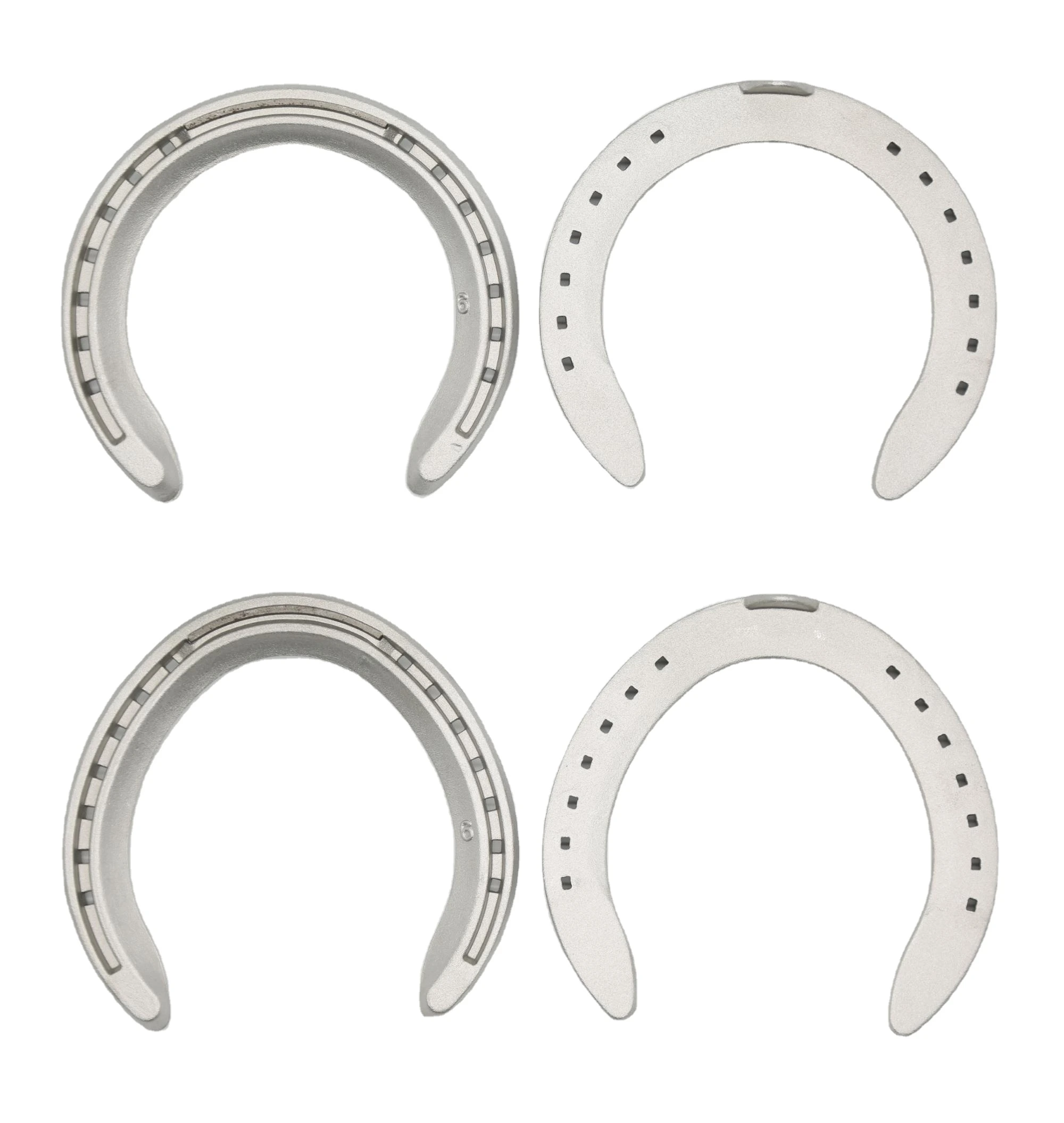
Material comparison
Five material families create different buying decisions
On a small screen, swipe the table sideways to see all columns.
| Material | Typical product value | Specification focus |
|---|---|---|
| Steel | Established forged model ranges with different patterns and sections | Grade, section, weight, geometry, nail holes and protection |
| Aluminum | Lower product weight and performance-oriented designs | Alloy, section, front/hind pattern, wear areas and finish |
| Copper | Distinct material and appearance for specialty requirements | Composition, intended use, surface and oxidation expectations |
| Rubber | Flexible or cushioning construction for defined designs | Compound, structure, dimensions, hardness requirement and attachment |
| Composite | Engineered construction for product-specific performance goals | Material system, reinforcement, geometry and approval testing |
Geometry still matters
Compare finished shoes, not material names alone
Two shoes made from the same material can differ in section, width, thickness, branch form, clips, nail holes, weight and finish. These variables affect fitting, handling, wear and cost. Use a model, drawing or sample to keep the comparison accurate.
Custom material programs
Develop the design around its material process
A steel shape should not be transferred unchanged to aluminum, rubber or composite without an engineering review. We assess the requested result, section, tooling and sample needs before confirming the proposed route.
Buyer decision
Use a short material brief
- Horse, discipline, market or commercial application
- Target weight, strength, durability or cushioning priority
- Required shape, size range and front/hind pattern
- Nail, clip, stud or attachment system
- Finish, marking, packing and expected quantity
Keep the comparison on the same basis
When comparing offers, record the actual model, dimensions, product weight, finish and packing unit. A lower unit price may refer to a different section or size, so keep the specification beside the price.
For copper, rubber or composite enquiries, send the existing product reference and intended requirements. Availability, construction and sample review are product-specific. The material comparison supports purchasing; suitability for a horse and use remains a professional fitting decision.
Buyer FAQ
Material Comparison FAQ
Compare the finished product and its requirements before selecting the material.
Which details make a steel and aluminum comparison useful?
Compare actual models with their dimensions, section, finished weight, features and intended requirements. Keep the finish, packing unit and quantity beside the quoted price. Material names alone do not define an equivalent product or a like-for-like offer.
Is a lighter horseshoe always the better choice?
No. Weight is one selection factor alongside geometry, wear requirements, nail compatibility and intended use. This page supports product sourcing; suitability and fitting for an individual horse remain decisions for a qualified professional.
Can one drawing be used unchanged for different materials?
Do not assume that it can. Steel, aluminum, rubber and composite constructions may require different sections, tooling and approval work. Identify the features and performance priorities to retain, then review the proposed material-specific design and sample.
How should I enquire about copper, rubber or composite shoes?
Send the existing product reference or drawing, intended requirements, size range and quantities. Construction, availability and sample needs are confirmed for that product. The material categories on this page are not a statement that every design or size is available from stock.
Factory review
Select material with the complete design in view
Send the intended product result, size range, current reference and expected quantity.