
A wholesale quotation for a horse bit is only useful when the buyer and supplier are pricing the same configuration. A model name, a photograph or a single mouth-width value may leave important order details unresolved. For importers, tack distributors and equestrian brands, a short specification record can make requests easier to compare, keep open questions visible and help purchasing teams carry an approved reference into repeat orders.
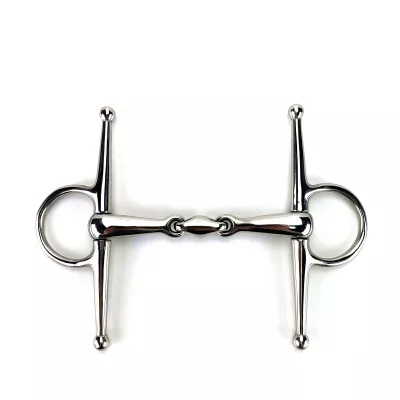
This guide uses RELIA Metalparts Model 203183 as a catalogue example. Its current product page identifies a stainless-steel full-cheek horse bit with a double-jointed mouth and elliptical link. The page lists mouth sizes from 4¾ to 5¾ inches, a 7-inch cheek length and an 18–20 mm mouthpiece thickness. These are catalogue fields, not a substitute for the drawing, sample or confirmation for the exact version being quoted. See the Model 203183 product listing.
The focus here is purchasing communication. It does not advise on selecting, fitting or using a bit for an individual horse. Ask a qualified equestrian professional to assess suitability for the intended horse and bridle.
Begin with one exact reference
Put the product model, product-page link and version at the top of the request. If you are comparing several suppliers, send the same reference information to each one. If the enquiry is based on an existing item, identify the sample with a label or reference number and state whether the requested quotation is for a catalogue match or a proposed change.
Keep a drawing number, revision and date with the request when a drawing is available. If a photograph is being used instead, label the views and identify which side, face or measurement each image shows. A picture helps explain intent, but it may not show all dimensions or concealed interfaces. Do not ask a supplier to estimate a critical dimension from an unscaled photograph.
For Model 203183, the official product page identifies the model number and general construction. Link to the current page rather than copying the product name alone. That lets the supplier and buyer refer to the same listing while any drawing, sample or order-specific additions remain attached to the enquiry.
Separate the dimensions into measurable fields
Record each requested size as a separate line. The Model 203183 page lists a mouth-width range of 4¾–5¾ inches, cheek length of 7 inches and mouthpiece thickness of 18–20 mm. Ask the supplier to confirm the measurement points and units for the exact option. Do not assume that a size label, catalogue convention or product photograph explains how a dimension is measured.
- Mouth width: write the requested value for each order line and confirm the measurement points. If your internal catalogue uses another unit, show the original unit beside the conversion and ask the supplier to confirm the selected option.
- Cheek length: identify the 7-inch catalogue value as the listed cheek length, then ask which endpoints define that measurement. If your drawing uses a different datum, attach it and mark the dimension clearly.
- Mouthpiece thickness: state the requested value in millimetres and ask where the measurement is taken. The page gives a range of 18–20 mm; it does not assign every value in that range to every width.
- Other drawing dimensions: list any dimensions that matter to your catalogue, bridle interface or inspection process. Mark which are critical and which are for reference, and do not infer missing values from a photograph.
When requesting multiple sizes, use one row per size instead of writing a range beside a total quantity. A line-by-line schedule makes it easier to confirm whether each width is available, how it is packed and how the quotation treats a mixed-size order.
Confirm construction and interface details
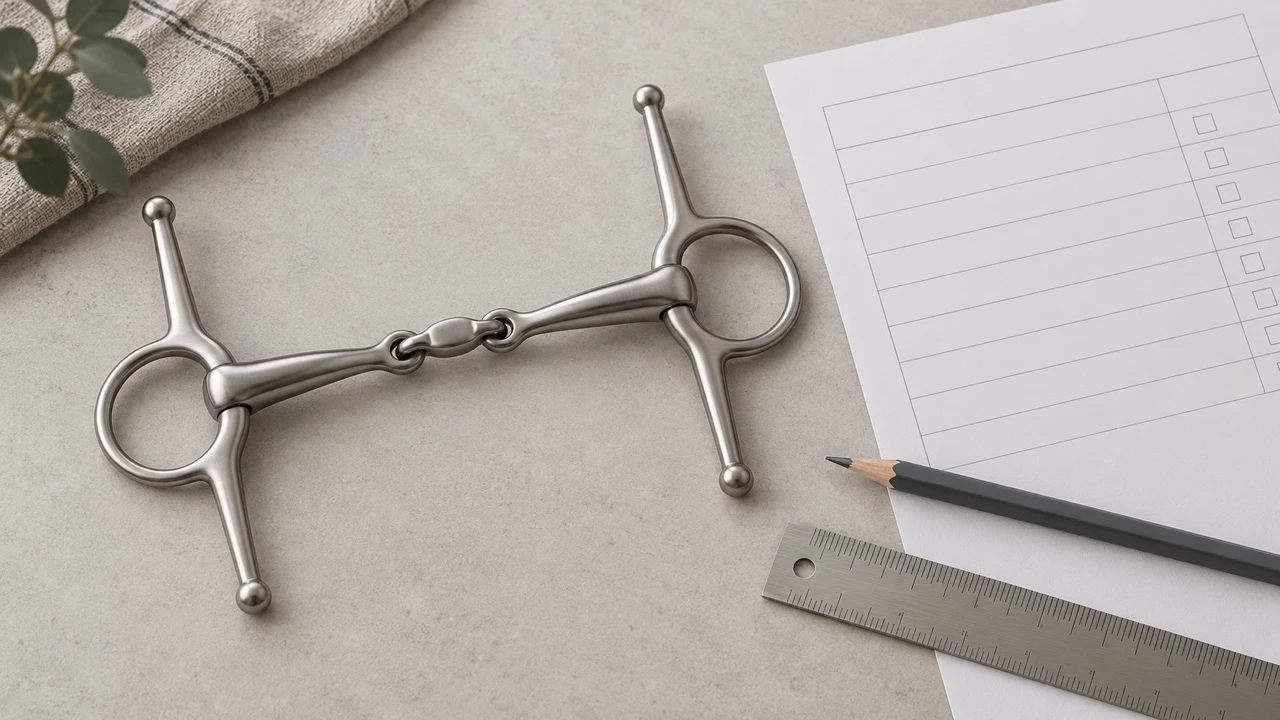
Model 203183 is described as a full-cheek bit with a double-jointed mouth and an elliptical link. Repeat those terms in the request so the quotation is tied to the intended construction. If an existing sample or drawing contains additional details, identify them separately rather than assuming they are included in the catalogue description.
Also ask about parts that affect the complete assembly. The product page tells buyers to identify any keeper hardware needed for the bridle. It does not state whether keepers are included, supplied separately or required for every buyer’s configuration. Put that question directly into the request and ask the supplier to state the included components in the quotation.
If you need a change to the listed design, describe it as a proposed modification. Attach a marked drawing or a sample reference and ask whether the change can be reviewed. The product listing does not establish that every requested change, material specification or finish is available. Keep the standard catalogue item and the proposed custom version on separate quotation lines.
Ask what the material description does and does not establish
The current listing identifies the material as stainless steel. It does not specify a stainless-steel grade, chemical composition, test report or particular corrosion-performance result. If your procurement process requires any of these, state the exact requirement and ask whether the supplier can provide evidence for the quoted item. Do not turn the general material description into a more specific grade or certification claim.
Where your internal policy calls for documents, identify the document name, scope, issuing organization and validity period you need to review. Ask whether it applies to Model 203183 or to a broader management system. Keep a copy of the response with the product revision and quotation so that the buyer, quality team and receiving staff can see what was actually confirmed.
Use the same care with surface finish, marking and packaging. If a finish or label is not specified on the public product page, describe the requirement and ask for confirmation. A general request such as “export quality” does not define a measurable finish, marking or inspection condition.
Make quantities and commercial units unambiguous
State whether the quantity means individual bits, pairs, sets or cartons. The product listing does not define the commercial selling unit, minimum order quantity or pack count. Ask the supplier to confirm each one for the exact model and size mix. If your company orders in cartons but sells individually, record both the supplier’s quotation unit and your internal stock unit.
For a mixed-size enquiry, show the quantity by mouth width. A schedule such as “10 pieces at 4¾ inches, 20 pieces at 5 inches” is easier to review than “30 bits, assorted sizes.” If quantities are estimates, label them as planning quantities and ask which conditions would change the quotation. Keep tooling, sample, packaging and freight charges separate where applicable so the commercial comparison is transparent.
Ask the supplier to quote any sample separately from the production quantity. Identify who will approve the sample and what records will be retained: for example, a dated photograph, a drawing revision or a signed sample label. Do not assume a sample is free, that it will be identical to a previous sample or that a sample approval automatically confirms every later production detail.
Include destination, timing and packing information
Provide the destination country and postcode or port, plus any delivery term your purchasing process requires. State a requested dispatch or arrival window only as a target. The current Model 203183 page displays a broad 7–60 day delivery-time range; ask the supplier to confirm what it means for the selected version, quantity, destination and order date. It is not a guaranteed date for a particular shipment.
Describe packaging at the level your warehouse needs: individual protection, inner-pack quantity, carton quantity, labels, barcodes, language, carton marks or mixed-size carton rules. If any packaging detail is mandatory for retail sale or import handling, attach the artwork or written requirement and ask for confirmation before order approval.
List the documents needed for your shipment or internal receiving process. The supplier should confirm which documents can be provided for the order rather than relying on a generic catalogue statement. Keep product specifications, packing instructions and the commercial quotation together, with the same model and size references on each.
Compare supplier replies on the same basis
Before choosing a quotation, check that the offers cover the same model, mouth widths, dimensions, construction and quantity unit. Compare material wording and supporting evidence separately from appearance. Record any field that is missing as “not stated” or “awaiting supplier confirmation” instead of treating silence as agreement.
| Comparison field | What to record | What to clarify |
|---|---|---|
| Item identity | Model, product link, drawing or sample revision | Whether the offer is the listed version or a proposed change |
| Size | Quantity by mouth width and listed dimensions | Measurement points, units and any size-specific limits |
| Construction | Full-cheek form, double joint and elliptical link | Keeper hardware and included components |
| Material and finish | Supplier wording for the quoted version | Grade, finish or documents if your specification requires them |
| Commercial unit | Pieces, pairs, sets or cartons | MOQ basis, pack count and mixed-size conditions |
| Sample and checks | Sample option, reviewer and approval record | Cost, timing and inspection evidence for the order |
| Delivery and packing | Destination, requested term and packing schedule | Current timing, freight and document availability |
Then compare price and other charges only after the specification is aligned. Separate unit price, sample charges, packaging, tooling if applicable, freight, insurance, taxes or duties where they are quoted. Ask what is excluded, what remains subject to confirmation and how long the quotation is valid. This creates a decision record instead of a comparison based on headline prices alone.
Use this full-cheek horse-bit RFQ template
Copy the fields below into your own purchasing request and complete the values that apply. Attach the current drawing or an identified sample if the catalogue description does not contain a dimension or interface detail you need.
- Product: RELIA Metalparts Model 203183 — full-cheek, double-jointed mouth with elliptical link
- Product reference: official product listing
- Requested mouth width(s) and quantity for each:
- Cheek length and measurement points to confirm:
- Mouthpiece thickness and measurement points to confirm:
- Drawing number, revision, date or sample reference:
- Keeper hardware and other components required:
- Material grade, finish, marking or document requirements:
- Sample quantity, evaluation process and approval record:
- Quantity unit: pieces / pairs / sets / cartons (please confirm):
- Inner and outer packing, labels, barcodes and carton marks:
- Destination country, postcode or port:
- Requested delivery term and target dispatch or arrival window:
- Documents required for purchasing, import or receiving:
- Questions that still need written confirmation:
Ask the supplier to return the quotation with the same line-by-line size schedule. Request that any unavailable field or proposed substitution be clearly identified rather than silently replaced. Before placing an order, keep the confirmed product version, quotation, sample approval and packing details in one controlled record.
Request a quotation for Model 203183
For a Model 203183 specification review, send the requested size breakdown, quantity unit, destination and drawing or sample reference through the RELIA Metalparts contact page. You can also email [email protected] or contact RELIA on WhatsApp at +1 404 203 0971. Ask the team to confirm the exact configuration and commercial terms for your order before treating any open field as agreed.
About this guide: RELIA Metalparts is an equestrian metal-products brand based in Qingdao, China. Model details above are drawn from its linked product listing, which should be checked again when preparing a new request. Product suitability, dimensions beyond those published, material grade, documents, minimum quantity, packaging, price and delivery for a particular order require direct confirmation.