

Custom horseshoe production from China
Custom Horseshoes, Built Around Your Range
Develop a horseshoe around your market, starting with an existing model, a drawing or a physical sample. We review changes to shape, size, nail holes, clips, finish and packing before agreeing the development route. You can compare the proposed changes and sample requirements before committing to a bulk order.
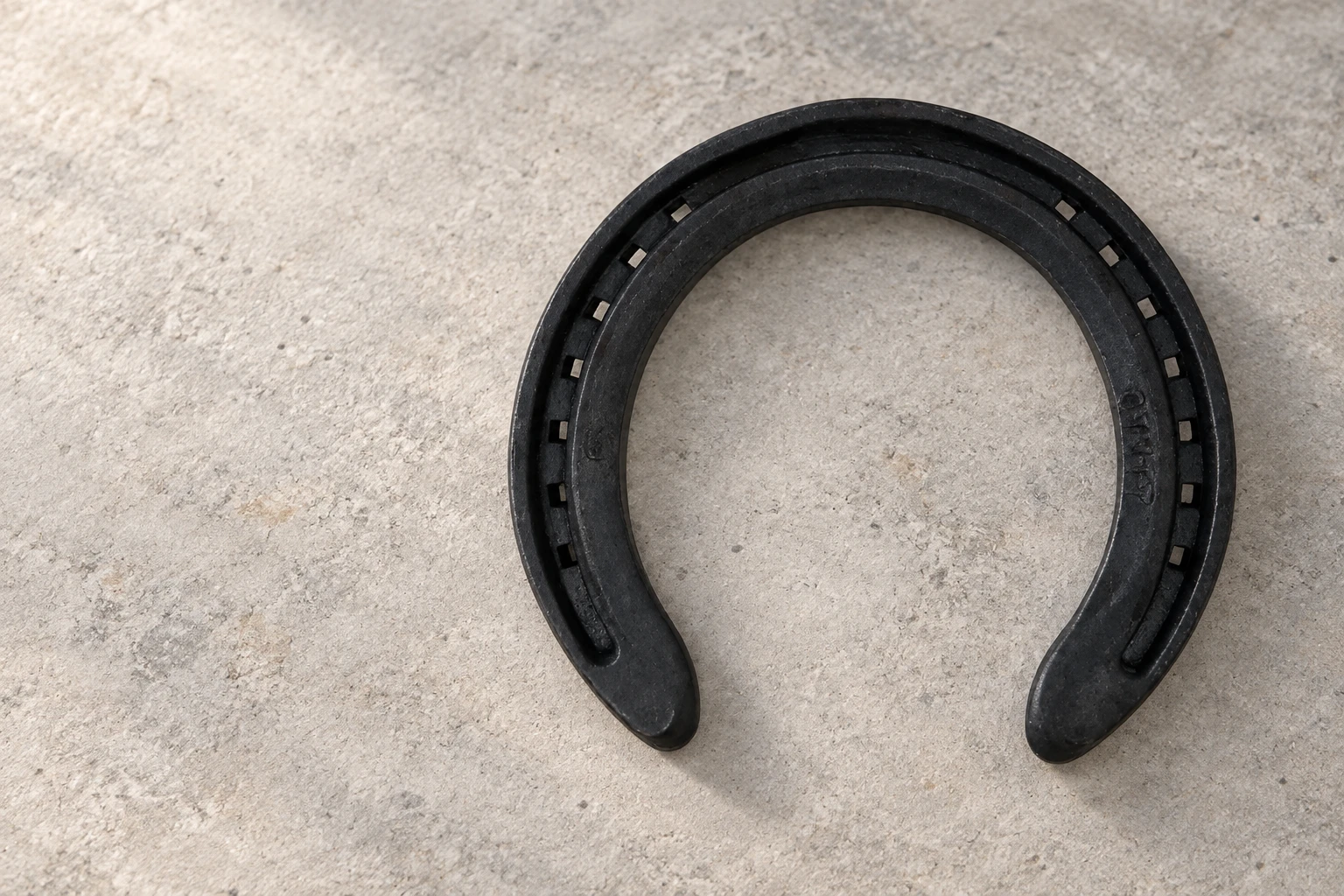
OEM scope
Develop steel, aluminum, copper, rubber and composite horseshoes
Our range includes steel, aluminum, copper, rubber and composite horseshoes. The development route depends on the selected material and model; a finish or packaging change may involve different work from a new outline or nail-hole layout.
Mark the dimensions and features that must remain unchanged as well as the modifications you need. We review feasibility for that design before confirming tooling or production.
Development route
Move from buyer input to one approved specification
Reference
Select an existing model or send the latest drawing, sample or design concept.
Engineering
Define material, dimensions, features, size family and tooling.
Approval
Review the drawing and sample against the buyer’s critical requirements.
Production
Use the approved revision for manufacturing, inspection and packing.
Commercial fit
Confirm minimum quantities and development costs by item
We confirm the minimum quantity by model, material, size mix and development route. Ask for any tooling and sample charges to be shown separately from the repeat unit price. Related sizes may have different requirements, so provide a quantity for each variant.
Long-term supply
Keep repeat orders tied to the approved version
For a repeat order, identify the approved drawing or sample version and the packing reference. Flag any new finish, size, logo or label requirement before production planning so a small change does not become an unrecorded specification change.
OEM brief
Give the factory enough information to make decisions
- Target market and intended product use
- Drawing, sample, model or concept
- Material and required performance priorities
- Size range, front/hind patterns and annual quantities
- Finish, branding, packaging and destination
- Sample, inspection and launch timing
A UK distributor refined an existing steel horseshoe
A UK farrier-supply distributor sent three reference sets for a five-size range in 2024. The project widened the toe area of two sizes by about 1.5–2.0 mm, adjusted the nail line and shortened the heel of one size by about 2 mm. Size identification and branch symmetry were also included in the review.
The buyer evaluated two sample rounds with farriers. The second round refined the heel and checked the shoe-and-nail combination before approval. The initial order was 12,000 pairs, inspected against the confirmed samples and dimensional checklist. The project shows the review process; its quantities and dimensions are not standard terms for other orders.
Buyer FAQ
Custom Development FAQ
Clarify the starting reference, tooling scope and approval route before development.
Can we begin without a complete technical drawing?
Yes. You can start with a physical sample, an existing model or a design concept. Identify the features to keep and those to change. We review the reference and the missing dimensions before agreeing a development route; a concept alone is not a production approval.
Does every custom change require a new mold?
No. Packaging, marking and product geometry involve different work. A new outline, section or nail-hole arrangement may require tooling changes, while a branded box has a different setup. The tooling and engineering guide explains how to separate these costs.
Does approval of one size cover the whole range?
Do not assume that it does. Each size and front or hind variant needs an identifiable specification. Agree which samples and dimensions cover the proposed size family, especially where clip position, nail holes or section change between variants.
How are changes after sample approval handled?
Identify the affected model, size and approved revision, then list the requested changes separately. The drawing, sample record and production instructions need to refer to the agreed version. Any additional sample work, cost or schedule change should be confirmed before release.
Factory review
Develop your custom horseshoe program
Send the design reference, material, size range, quantities and market requirements. We will map the production route.