
Nail sourcing / quantity control
Compare an identified nail and its intended shoe before comparing the price. Then put pieces, boxes and cartons on the same basis: the E5 and ASV2 catalogue examples use different listed pack counts.
The short version
Confirm the item, the interface and the ordering unit.
A series name and a box price are not a complete specification
A horseshoe nail enquiry can look simple: a series, a size and a number of boxes. The difficulty is that each of those details needs a clear meaning. A series name does not confirm every dimension or its fit with a particular shoe, and a box price cannot be compared fairly until the pieces in that box are known.
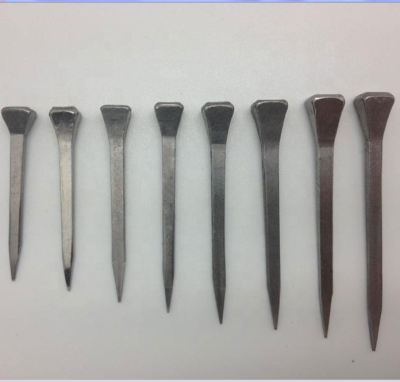
RELIA's catalog provides a useful example of why item-level identification matters. The E5 listing describes 51 mm nails and 200 pieces per box, while the ASV2 listing describes 250 pieces per box. Another listing identifies a type E nail range. These are catalog descriptions for distinct references, not evidence that the items are interchangeable or that all nails share one packing rule.
This article follows the purchasing decision from listing review to receipt. It uses those real product references to explain how to organize the enquiry. Final dimensions, compatibility, pack quantities and commercial terms should be confirmed for the selected item before ordering.
Keep the exact product reference with the enquiry
Save the product link and identify the selected variant, not only the words E5 or ASV2. Add your internal item code if the nail will become part of a distributor range. If you are replacing an existing product, identify that reference separately and explain whether you need an equivalent item or are considering a different option.
A supplier may receive several enquiries that use similar short names. The link, variant and intended matching shoe help distinguish what the buyer means. They also provide a stable reference when the quotation and packing list are prepared.
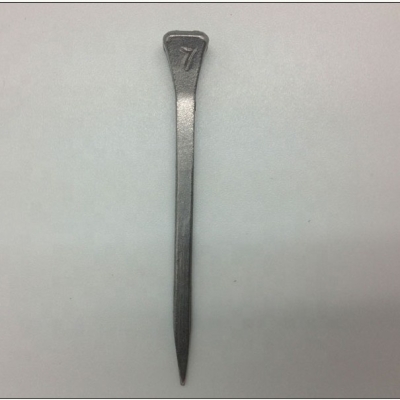
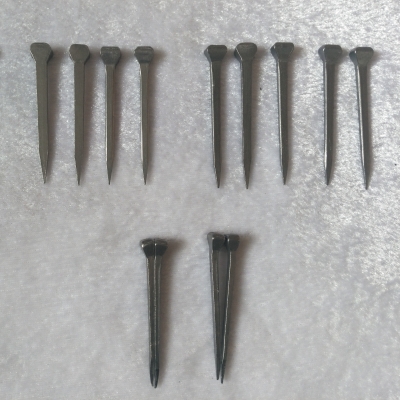
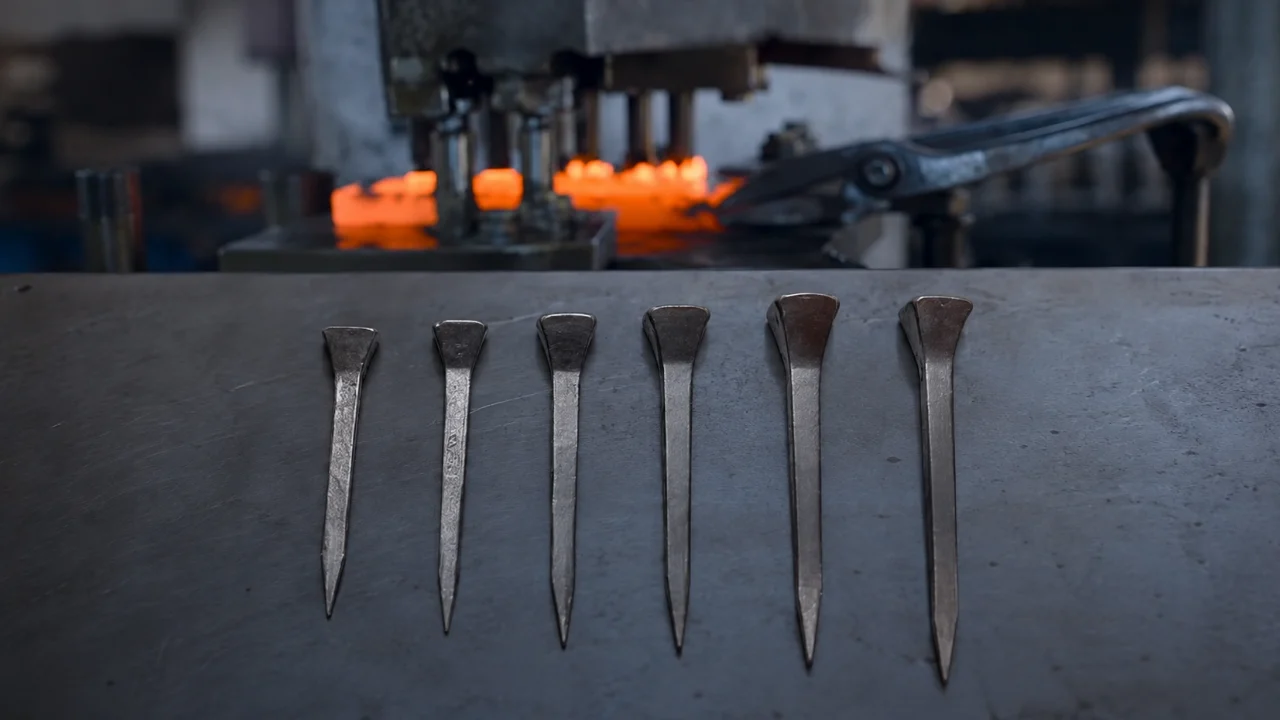
Avoid merging two listings because their images look alike. The photograph may not show every dimension, and a range image may illustrate more than one variant. If the listing title, selected option and image markings do not agree, record the conflict and request a confirmed item sheet. Do not silently choose the most convenient interpretation and pass it into the purchase order.
Connect the nail to the shoe it must fit
The intended shoe is part of the compatibility question. Include its model or product reference and the relevant nail-hole information in the enquiry. Ask for the nail dimensions and head form needed to assess that interface. The aim is to identify the actual combination, not to obtain a general statement that one series fits all shoes.
If you have a current approved nail and shoe combination, label both references when requesting an alternative. Note which features must remain the same and which differences are acceptable for evaluation. A sample request should state the purpose of the review so the supplied item can answer the right question.
Assessment of the shoe-and-nail arrangement for use on an individual horse should be made by an appropriately qualified professional. A purchasing comparison organizes product information and sample approval; it is not an instruction for shoeing or a guarantee of suitability in every application. Keep any professional feedback within the scope of the combination actually assessed.
Check the dimensions and the wording independently
For the selected nail, record the stated length and unit, series, head description, shank details and finish. If a dimension is important to your acceptance criteria, confirm it in the specification rather than relying only on promotional wording. A clear series marking is useful identification but does not replace the rest of the record.
The E5 product title includes 51 mm. That is a catalog statement to verify against the selected variant and supplier-confirmed specification; it should not become a guessed dimension for another E-series item. The same principle applies to a material or treatment mentioned in one listing. Do not carry it across the range without item-specific support.
Words such as flexible, durable or anti-rust may describe an intended selling point, but a buyer with a defined performance requirement needs the relevant evidence and scope. Ask which material, model or test supports the claim. The appearance of the nail is not, by itself, a performance report.
Normalize the packing unit before comparing the quotation
Pieces, boxes and cartons are different ordering units. Write down the number of pieces per box and the number of boxes per carton for each line, then identify which unit the quoted price uses. Do not compare two per-box prices as though the boxes necessarily contain the same quantity.
Using the catalog pack descriptions as an arithmetic example, 1,000 nails would correspond to five boxes at 200 pieces per box or four boxes at 250 pieces per box. This is only a unit-conversion example. It does not mean the two nail models are substitutes, establish a minimum order or confirm the current packing arrangement.
To compare product cost per piece, divide the relevant box price by its confirmed piece count. Keep other included or excluded costs visible, such as agreed packaging, inspection or freight. A lower number on the box-price line is not automatically a better offer when the product, quantity or delivery basis differs.
Compare packs without implying equivalent products
An arithmetic illustration based on the two catalog descriptions. It is not a MOQ, stock statement or compatibility claim.
| Catalog reference | Listed pieces per box | Boxes for an illustrative 1,000 pieces |
|---|---|---|
| E5 51 mm reference | 200 | 5 |
| ASV2 reference | 250 | 4 |
Make the carton and label support the item identity
Once the product and pack quantity are agreed, carry the same item reference onto the packing instructions. The label should identify the agreed series or model, size, pack count and any customer code required by your warehouse. If private-label artwork is involved, identify the approved artwork version and barcode requirements.
For a mixed order, ask how the different nail references will be separated and identified. A carton containing several variants needs a packing list that lets the receiving team locate and count them without relying on the visual appearance of loose nails. Confirm whether an outer-carton quantity means boxes or pieces.
Discuss protective packing for the selected finish and route as part of the order. Do not assume that a general anti-rust description removes the need to consider handling, moisture or storage conditions. The actual packing method and any particular protection requirement should be agreed with the supplier rather than inferred from a photograph of a retail box.
Use a sample review to close the specification, not restart it
Request samples against the identified nail reference and the confirmed information you have gathered. State which questions remain open: dimensions, appearance, matching-shoe assessment, labeling or pack configuration. If the review requires the shoe as well as the nail, make that requirement explicit.
When the sample arrives, record its identity and compare it with the agreed specification. Keep dimensional observations separate from appearance notes and any documentary review. If your team evaluates a matching combination, identify the exact shoe used and the scope of that evaluation.
Do not approve the entire range based on one unspecified sample. Where several sizes or series are planned, discuss which differences require separate evaluation. If a sample leads to a change in the selected item, update the reference and order information before authorizing bulk supply. RELIA's Samples & Approval guide explains how to keep those decisions in one usable record.
Build a purchase line the receiving team can check
A clear purchase line connects your item code, supplier reference, series, size, required material or finish, quantity and ordering unit. Add the agreed pieces per box and boxes per carton, plus the approved label or packaging reference where relevant. Keep the sample or specification approval accessible to the receiving team.
If the quotation contains alternatives, identify which alternative has been accepted. Do not leave both versions in the order without a decision and assume the supplier will know which one your warehouse expects. The same applies when an item is temporarily unavailable: a proposed substitute should be reviewed and approved rather than shipped under the original description.
Confirm commercial terms separately for the actual order, including minimum quantities, timing and delivery arrangements. A product title is not a complete commercial agreement. The quotation guide explains how to keep product cost, packing and delivery terms comparable without adding invented default promises.
Connect the fit decision with the warehouse count
Use the actual nail and shoe references before turning the offer into an order.
Identify
Keep the series, selected variant and matching-shoe reference together.
Evaluate
Resolve dimensions and the scope of sample assessment.
Define the unit
State pieces per box and boxes per carton for the selected item.
Receive
Compare identity and counts at the agreed packing level.
Product references
Product links identify catalog examples; they do not confirm current stock or an approved specification.
Check count discrepancies at the correct level
On receipt, compare the packing list with the shipment and keep the item identities visible while counting. If the discrepancy concerns boxes per carton, record that separately from a concern about pieces inside a box. State the expected count, the count checked, the relevant carton or pack and the method used.
Preserve the labels and packing evidence while the issue is reviewed. Photographs should identify the shipment and affected item, not only show loose nails without a reference. If the concern involves a specification difference, record the requirement and the observed result alongside the quantity information.
Use the reporting process and deadlines agreed for the order. This article does not establish a universal claim period or an automatic remedy. The purpose of the record is to make the question understandable so the supplier and buyer can investigate the actual discrepancy instead of trying to reconstruct what a box or carton meant.
Send a short enquiry with the right context
To begin with RELIA, send the nail product link, selected size or series, matching-shoe reference, required quantity and destination. State whether the quantity means pieces, boxes or cartons. If you have a preferred pack count or private label, include that requirement rather than assuming the catalog image represents the final packing.
The Horseshoe Nails Selection Guide provides a concise model-selection checklist, while Packaging & Labeling explains how to make the order easy to receive. Use those pages for the general requirements and keep this item-level comparison with your actual quotation and sample record.
The goal is not to make a small component purchase unnecessarily complicated. It is to remove the few ambiguities that can change the product, the price comparison or the warehouse count. A precise reference, a confirmed interface and a clearly defined unit give both teams a practical basis for the order.
Catalogue References Used in This Article
These links identify the examples discussed above. Confirm the selected variant, specification and packing for the actual order; a catalogue description is not a test result or a live stock confirmation.
Bring the Next Decision to the Team
Send your product reference, quantity, destination and the questions still open. A drawing or identified sample helps us discuss the actual requirement.