
Adding hoof nippers to a farrier-supply catalogue involves more than choosing a tool by its overall length. Buyers need a product record that lets farriers distinguish the intended model, lets warehouse teams identify the version received, and lets the supplier quote the same configuration that the buyer reviewed. A disciplined specification also makes it easier to compare offers without assuming that similar photographs represent interchangeable tools.
This guide is for importers, wholesalers, tack shops and professional-supply businesses assessing a hoof-nipper range. It focuses on purchasing information, sample review and repeat-order records. It is not a trimming tutorial or veterinary advice. Product suitability and use should be assessed by qualified farriers and other relevant professionals.
Start with a defined product reference
Give every enquiry a product reference that can be followed from the quotation through sample review, purchase order, carton label and reorder. The reference may be a supplier model, your own internal SKU, or both. If you are evaluating a new item, create a temporary comparison code so that photographs, drawings and supplier questions all refer to the same candidate.
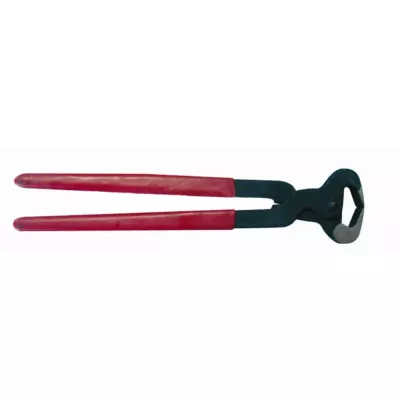
RELIA Metalparts currently lists an iron horse hoof nipper as model HW709 with a recorded overall length range of 14–15 inches. The listing does not define one exact length within that range or publish every jaw, hinge and handle dimension. Treat this as a catalogue identification point, not a complete technical specification. Before placing an order, state the exact version you want quoted and ask the supplier to confirm the corresponding drawing or sample.
Review the RELIA HW709 listing. If your product team is comparing several farrier tools, the farrier hoof-care tool range provides a starting point for identifying the items that need separate specifications.
Record overall dimensions without relying on the product photo
“14–15 inch” can describe a range, but it is not sufficiently precise for a purchase order if your assortment requires one fixed size. Ask the supplier which overall length is available for the version under review and how that length is measured. Record the measurement endpoints, unit, tolerance if agreed, and drawing revision. Do not measure a web image or infer scale from a photograph.
For internal comparison, buyers may also want to record closed length, open span, jaw width, jaw depth, handle length and the distance between the handles at a specified opening. These fields are prompts for a drawing or sample review, not published HW709 measurements. Mark each item as “confirmed,” “supplier to confirm,” or “not required.” That status prevents an unverified number from quietly becoming a specification during a later reorder.
Where a dimension affects storage, display packaging or a farrier’s preferred tool choice, identify it as a critical-to-review field. Ask every supplier to use the same measurement points. A drawing with arrows and units is usually clearer than a list of numbers without a view showing which surfaces or endpoints those numbers describe.
Describe the jaw and cutting interface as questions to verify
The jaw is central to comparing nippers, but a catalogue title or product photograph does not establish the detailed geometry. Ask for clear views of the open and closed jaw, together with any available drawing or sample. Agree which observable features matter to your buyer: jaw profile, contact faces, cutting-edge alignment, edge condition and the visible relationship between the two sides when closed.
Do not translate a visual impression into a hardness, cutting-force, durability or service-life promise. Those claims need evidence and should be discussed against an agreed test method if they are part of your sourcing requirement. If your business has a defined acceptance method, share it before ordering and confirm that the supplier can review it for the specific tool. If not, keep the record descriptive and limit it to the checks your team can actually perform.
Ask whether sample approval will be based on one reference sample, a drawing, photographs, or a combination. Note who approves the sample and how the accepted version will be identified. A dated photograph can support traceability, but it should not replace a measurement or written criterion where a dimension is commercially important.
Check hinge movement and handle details on the sample
For a sample review, define the observations before the sample arrives. Buyers can record whether the hinge moves through the agreed range without visible interference, whether the jaws meet in the expected manner, and whether both handles appear aligned against the agreed reference. These are purchasing observations, not a guarantee of tool performance or a substitute for professional assessment.
Handle length, shape, surface covering and color can distinguish catalogue versions and influence how an item is presented to customers. Confirm the exact handle configuration rather than assuming that every unit shown in a listing has the same coating or dimensions. If color consistency matters, state whether the requirement applies to the handle covering, the metal finish, packaging, or all three. Identify any permitted variation in writing.
Inspect the pivot area, visible fasteners and finish for the characteristics you have chosen to review. If you need a specific material grade, heat treatment, coating chemistry, corrosion result or safety document, name it explicitly and request evidence for the quoted version. The words “iron” or “steel” alone do not verify a particular grade or treatment.
Separate product identity from assortment and pack data
Wholesalers often handle multiple tool lengths, handle colors, finishes, package formats and private-label variants. Keep product identity fields separate from commercial pack fields. A useful comparison record includes supplier model, buyer SKU, description, fixed size if confirmed, material wording as published or verified, handle configuration, finish, unit of sale, units per inner pack, units per carton and carton markings.
State quantity using an unambiguous unit. “500” could mean individual tools, inner packs or cartons; write “500 pieces,” “500 retail packs of one,” or the actual unit agreed by both parties. If the supplier quotes a mixed assortment, show the quantity for each model or version. Specify whether each item needs a barcode, language label, warning, instruction insert or retail-ready package. Do not assume these are included in a standard pack.
For private-label requests, attach artwork and identify the surfaces where marks may appear. Confirm artwork approval, color references, mark size and packaging responsibilities before production. A request for private label does not by itself establish that tooling, printing or packaging changes are available for every model. Ask which elements can be reviewed and have the supplier confirm any setup cost or minimum quantity in its quotation.
Build sample and inspection checkpoints into the order record
A sample plan should connect the version reviewed with the version ordered. Record the date received, supplier model, sample identifier, photographs, drawing revision, reviewers and unresolved questions. If a change is agreed after the first review, retain both records and state which one controls. Avoid approving a sample with a message such as “looks good” when important dimensions or package details remain open.
Before production or dispatch, agree what checks will be reported, who performs them and what evidence is supplied. Depending on the purchase, a buyer may request measurement records for selected dimensions, a visual finish check, unit and carton counts, or confirmation that the shipment matches the approved reference. These are examples of buyer requirements, not claims that any particular inspection service is automatically included.
If independent inspection or a formal report is needed, identify the scope and timing before the order is confirmed. Specify the inspection criteria, sampling approach and document format that your organization accepts. A report is only useful when its scope matches the product, order and requirement being evaluated. Do not treat a general company certificate as proof that a particular nipper model passed a product-specific test.
Make the request for quotation comparable
Send suppliers the same brief so that responses can be compared on a like-for-like basis. Include the product reference, exact requested configuration, drawing or sample, units and quantities, destination, packaging, marking, sample needs, inspection requirements and requested quotation validity. If a field is undecided, label it as open and ask the supplier to identify its assumption.
Ask the supplier to separate unit price from tooling, artwork, packaging, sample, inspection and freight charges where applicable. Request the currency, minimum order quantity for the specified version, available payment terms, delivery basis and shipment destination used for the quotation. These are order-specific commercial details. They should be confirmed in the supplier’s written offer rather than copied from an old order or inferred from a product listing.
Compare quotations by configuration and total landed-cost assumptions, not by headline unit price alone. A lower figure may refer to another length, pack unit, finish, order quantity or delivery basis. Keep excluded charges visible. If a supplier has left a field blank, mark it “not stated” and ask a follow-up question instead of treating the blank as a favorable term.
Use a practical incoming-check plan
After delivery, receiving staff need enough information to identify the ordered version without interpreting marketing language. The purchase order, packing list, product label and approved sample record should use compatible references. At receiving, check model identity, package count, assortment breakdown, carton condition and the dimensions or visual criteria that were explicitly agreed. Record discrepancies with the affected quantity and photographs.
For repeat purchases, save the accepted specification with the supplier quotation, order number and shipment record. Reconfirm any change in model, drawing revision, material description, handle configuration or packaging before approving a repeat order. A saved product photograph can help identify the general style, but it cannot prove that an unseen technical characteristic remained unchanged.
If your organization tracks supplier performance, distinguish data you measured from data supplied by the seller. For example, record receipt date from your system, observed carton count from receiving, and the supplier’s stated production schedule as separate items. This helps procurement teams learn from actual orders without turning estimates into verified facts.
Copyable hoof-nipper RFQ checklist
- Supplier model and buyer SKU:
- Exact overall length requested and measurement endpoints:
- Drawing or sample reference, revision and date:
- Jaw profile and dimensions to be confirmed:
- Hinge and handle configuration to be reviewed:
- Material, finish or treatment requirement and requested evidence:
- Unit of sale, quantity by version and pack format:
- Private-label marks, packaging artwork and language needs:
- Sample approval owner and acceptance record:
- Inspection criteria, timing and required documents:
- Destination and requested delivery basis:
- Price currency, MOQ, charges and quotation validity:
- Open questions or assumptions the supplier must confirm:
Discuss a specific tool requirement
RELIA Metalparts lists model HW709 as an iron horse hoof nipper with a recorded length range of 14–15 inches. The listing does not provide every engineering dimension or order condition. Buyers should send the exact target length, drawing or sample reference, required checks, quantity unit, pack plan and destination so the supplier can review the requested version and confirm the details that apply.
Open the HW709 product listing to start from the published catalogue record. For an enquiry, use the product page’s inquiry option or contact RELIA at [email protected] or WhatsApp +1 404 203 0971. Include your specification and destination; availability, price, MOQ, sample arrangements, inspection scope and delivery timing should be confirmed for your order.
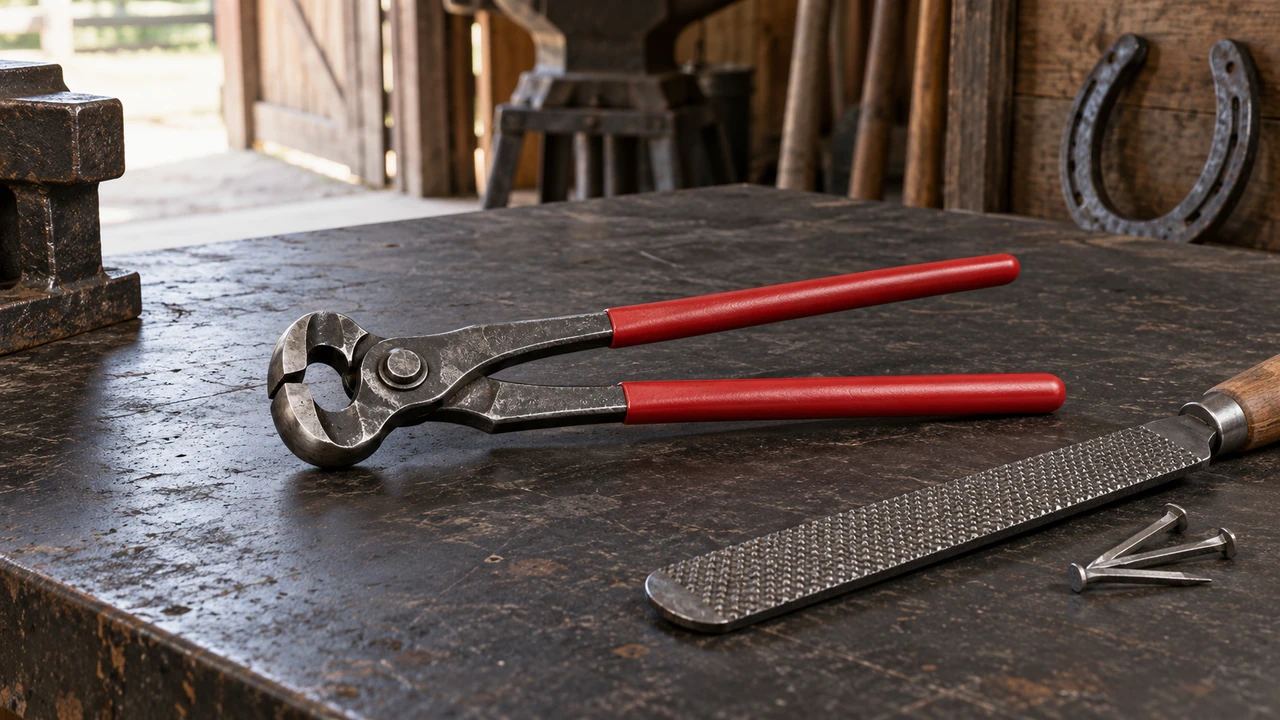
About this guide: This purchasing checklist is published by RELIA Metalparts Buyer Resources. The cover image is an illustrative scene and does not depict a verified HW709 configuration. The HW709 reference above reflects the linked catalogue listing as reviewed for this article. It does not establish technical properties or commercial terms beyond those stated there. Confirm requirements and the quoted configuration directly before placing an order.