
A supplier comparison is useful only when every quotation refers to the same item and the same delivery basis. Start with the current product reference, then record the size system, front or hind pattern, dimensions, nail-hole layout, material, finish, packing unit and destination. Keep measured facts separate from questions that still need confirmation. This checklist is for purchasing teams, equestrian distributors and farrier-supply businesses reviewing a horseshoe range or considering a supplier change.
1. Define the buying decision
Before asking for prices, decide what you are evaluating. A repeat purchase of an approved item is different from a trial order, a new catalogue range or a custom development project. Write down whether the goal is to replenish an existing model, add sizes, compare a different material, develop a private-label item or qualify an additional supplier. Each goal needs a different evidence pack and a different next step.
Identify who will review the proposal. Purchasing may compare commercial terms; a farrier or product specialist may assess the pattern and fit; receiving may check packing and labels; compliance staff may review documents. If one person collects all the information, note which colleague must approve each decision. That prevents an attractive quotation from being treated as technical approval.
2. Make the existing product identifiable
Use the code that appears on your purchase order, stock system or packaging. Add the supplier name and, where possible, a photograph of the actual item and its label. If a product has changed over time, record the revision or the date of the sample. A familiar name such as “size 3” may refer to different measurements between product ranges, so never treat the size label alone as a cross-supplier specification.
Keep one controlled reference for the comparison: a current drawing, a measured sample or an approved technical sheet. If these disagree, mark the conflict instead of silently choosing one. Tell each supplier which document governs the request and whether a proposed alternative must match it exactly or may be reviewed as a new design.
3. Compare dimensions and pattern features
For each size, record the measurements that matter to your program. Depending on the product, these may include overall length and width, branch or heel dimensions, section width and thickness, toe shape, clip arrangement, and the distance between nail holes. State the measurement points and units. A number without a defined measuring point is difficult to compare or inspect consistently.
Keep front and hind patterns distinct. If a range includes both, identify which sizes or quantities belong to each pattern. Do not combine a front shoe and a hind shoe under one line simply because they share a size label. Where a drawing is available, identify its revision and mark the dimensions that are critical, approximate or still open for discussion.
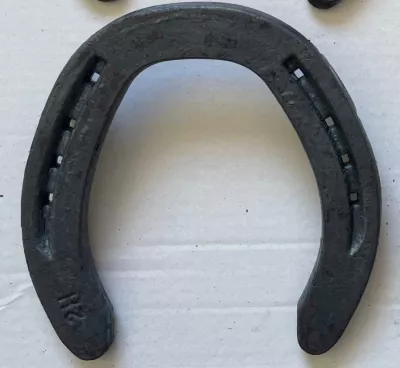
A product photograph can help identify a reference, but camera angle and scale can distort apparent proportions. Use a ruler, caliper or drawing for measurements and retain the original record with the quotation. Ask the proposed supplier to state any difference from the current item instead of describing a non-identical design as an exact match.
4. State material and finish separately
Write the requested material in the item specification and keep it separate from finish, colour and appearance. “Steel,” “aluminum,” “bright,” “black” or “coated” do not by themselves define every property a purchasing team may need. If a specific grade, alloy, coating or test is required, name the requirement and ask for evidence that applies to the proposed item and revision.
When comparing two materials or finishes, use an agreed basis. A statement about appearance is not a corrosion test; a general certificate is not automatically evidence for every product; and a result from one model should not be assigned to another. If performance matters, agree the test method, conditions, sample identification and acceptance criteria before treating a claim as a buying specification.
5. Check nail compatibility as its own question
Horseshoe and nail selection are connected, but one product name cannot establish compatibility. Record the nail series or reference currently used, the relevant nail dimensions and the information available about the shoe’s hole layout. Ask the supplier to confirm the proposed combination against a drawing or sample. If that review has not happened, leave compatibility marked “to be confirmed.”
For a supplier change, a farrier or another qualified reviewer should decide whether the proposed shoe and nail combination is appropriate for the intended use. The commercial comparison should not replace that professional assessment. Keep any approved combination linked to the product code and revision so the same decision can be checked on repeat orders.
6. Use samples and approvals deliberately
A sample gives the review team a physical reference for the features that can be inspected. Before it arrives, decide what to examine: dimensions, front or hind pattern, nail-hole positions, finish, markings and packing. Record the result against the sample code or date. If a feature is not visible or measurable from the sample, request the drawing, specification or test record that addresses it.
Separate sample approval from production approval. A sample can confirm the design under review; it does not automatically establish current stock, production capacity, quality performance across future lots or a delivery date. If a later revision is supplied, compare it with the approved reference and document any change before ordering. Retain the approved sample or clear photographs when your internal process permits.
7. Compare quotations on the same commercial basis
For a fair comparison, ask each supplier to state the currency, price unit, quantity basis and packing unit. Clarify whether the quotation is per shoe, pair, set, box or another unit. Include the estimated quantities for each size and pattern, not just a total that hides the assortment. If tooling, labels, packaging or samples have separate charges, ask that they be shown as separate lines.
Give each supplier the same destination and delivery information. Record the delivery term, named place, estimated dispatch or arrival window, and any assumptions about freight or customs. Do not compare one supplier’s price at the factory gate with another’s delivered price as though they were equivalent. If an important term is missing, mark it as a question rather than filling it in from a past order.
Minimum order quantity, payment terms, sample costs, lead time, available stock and shipping options are specific to the seller, item and destination. Ask for written confirmation for the selected product and order. A catalogue page or a previous transaction may help identify a reference, but it is not proof that the same terms apply now.
8. Review documents at product and order level
First decide which documents your company needs for supplier approval or a particular order. Possible requests may include a business document, a material record, a product report, a quality-system certificate or an inspection record. Ask who issued each document, what entity and product it covers, its scope and dates, and whether the version applies to the goods being quoted.
Keep claims proportional to their evidence. The presence of a document does not automatically prove that every model meets every standard. If a certificate is important to your decision, verify its issuer and scope using the issuing organization or another appropriate source. Keep the approved version with the supplier record and note any limits that still need clarification.
9. Separate repeat stock, new development and delivery planning
An existing catalogue reference, a stocked item and a new OEM design are different supply routes. For a repeat item, identify the approved model and requested quantity. For a new design, identify the drawing or sample, material and finish, tooling questions, approval stages and packaging needs. Do not assume a development project can follow the schedule of a standard catalogue item.
For overseas availability, ask which exact model, sizes and quantities are covered and where the goods would ship from. Distinguish warehouse availability, dispatch date, transit time and arrival at the destination. If your business has a launch or customer deadline, state the date and explain what it means. Treat the date as a request until the supplier confirms a feasible plan in writing.
10. Build a concise enquiry record
A useful enquiry lets a supplier understand the product line without guessing. Include the product reference, drawing or sample, size list, front or hind pattern, material, finish, nail reference, quantities by size, packing expectations and destination. List any required documents and the date by which you need a response. Put unanswered questions in a separate section so confirmed specifications do not get mixed with assumptions.
For a catalog example, the RELIA Metalparts forged-steel horseshoe listing for model 1000006 identifies a training and competition product reference. The page asks buyers to confirm the selected size, front or hind pattern, nail-hole layout, material and finish for their order. It should be used as an item reference, not as a cross-brand size conversion or a guarantee of suitability for an individual horse.
To discuss a specific requirement, contact RELIA Metalparts through the official contact page or email [email protected]. WhatsApp is +1 404 203 0971. Include the model, size or drawing, quantity, packing basis and destination. Product availability, price, lead time, freight, documentation and any custom work should be confirmed for the request in writing.
Buyer checklist
- Identify the existing supplier, product code and approved revision.
- Attach the controlling drawing, measured sample or technical sheet.
- List dimensions, units, front or hind patterns and size quantities.
- Specify material, finish, nail reference, labeling and packing.
- Separate confirmed requirements from open questions.
- Compare all quotations using the same quantity, currency, packing and delivery basis.
- Record who reviews technical fit, documents, samples and commercial terms.
- Obtain written confirmation for availability, schedule, price and destination-specific freight.
Frequently asked questions
Can two horseshoes with the same size label be treated as equivalent?
No. The label is one reference point. Compare the dimensions, pattern, section, nail-hole positions and other agreed features, then arrange a suitable review before approving an alternative.
Does a product photograph replace a drawing or sample?
No. A photograph helps identify an item but usually cannot establish all dimensions, material details or production tolerances. Use a controlled drawing or measured sample when those facts are important to the decision.
What should be written into an approved sample record?
Record the product code, size, pattern, sample identifier or date, documents reviewed, measurements checked, finish and packing observations, reviewer and decision. List any deviations and whether they were accepted, rejected or left open.
Can a supplier’s listed delivery time be used for every destination?
No. Confirm the selected item, quantity, dispatch point, transport method and destination. State whether the requested date is for dispatch or arrival and wait for written confirmation of the applicable schedule.