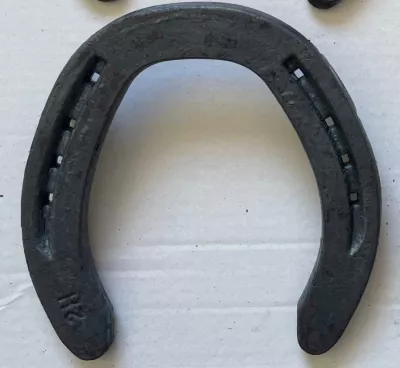


Plan a supplier change before comparing prices
Changing a horseshoe supplier can affect product fit, inventory, quality checks, packaging, and customer expectations. A lower quotation is only useful when the offered item meets the buyer’s defined requirements and the commercial basis is clear. Begin by documenting why a change is being considered: a range gap, a sourcing review, a specification update, a service issue, or a need for another supply option. The reason determines what evidence and approvals are needed.
Do not assume that a product is equivalent because it is described as an alternative to a familiar brand. Similar category names do not establish identical dimensions, material, performance, certification, compatibility, or approval. Treat each proposed item as a separately identified product. Compare it against the buyer’s own specification, sample, or drawing, and use brand references only when the comparison is accurate, substantiated, and legally appropriate.
Capture the current baseline
Before requesting quotations, assemble the current approved item record. Include the item code, size range, front or hind designation where applicable, pattern, drawing revision, nail-hole layout, material description, finish, unit of sale, and packaging. Add known inspection requirements and any documents routinely needed at receiving. If a detail is unknown, label it unknown rather than assuming the incumbent supplier’s catalogue covers it.
Record real usage constraints that influence buying: which sizes sell together, whether the buyer stocks single sizes or a range, how orders are forecast, and what packaging makes warehouse handling workable. A supplier may need the expected mix rather than just a total quantity. This baseline prevents a quotation from appearing comparable when it prices a different configuration, incomplete size set, or different unit basis.
Translate user needs into a written specification
Use a drawing, measured sample, or structured specification to communicate the desired item. Define critical dimensions, tolerances, pattern, thickness, shape, nail-hole number and placement, material, finish, and any marking or packaging requirements that apply. Specify the inspection method and acceptance criteria for characteristics that matter. Attach clear photographs as context, but do not treat a photograph as a substitute for dimensions or material documentation.
Separate mandatory requirements from preferences. A buyer may require a particular size range and hole layout while remaining open to packaging or finish options. This distinction lets a supplier answer accurately and exposes gaps early. Ask the supplier to list deviations explicitly in the quotation. If there is a design change, identify the revision and require agreement before any production proceeds against it.
Compare samples systematically
When samples are available, assign each one a reference number and record the supplier, model, size, date, and revision. Compare it to the approved baseline using the same tools and conditions. Check dimensions, shape, hole layout, pair consistency, finish, marking, and visible workmanship. Record measurements rather than relying on “looks close.” Have the intended qualified reviewer assess fit or practical handling where appropriate.
A sample inspection can confirm only the attributes examined. It does not automatically prove consistency across a future batch, long-term service life, certification, or suitability for every animal and use. If field evaluation is appropriate, define the reviewer, conditions, observation period, record format, and stop criteria in advance. Follow professional guidance and do not make safety or welfare conclusions beyond the competence of the evaluator.
Ask for evidence that matches the claim
If a supplier states a material grade, tolerance, test result, or certification, ask what record supports it and whether that record applies to the exact offered item, production site, and current revision. Check issuer, scope, date, lot or model identity, method, and limitations. A broad claim such as “OEM quality” or “certified” is not sufficiently precise on its own. Request the actual document or an accurate, verifiable statement of scope.
Performance comparisons require particular care. A claim that a product matches another maker, lasts a stated percentage longer, or has a specified failure rate needs reliable comparative evidence using a defined method and equivalent conditions. Without it, remove the comparison from product copy and purchasing assumptions. Buyers can still compare practical characteristics directly: specified geometry, documented material, sample results, inspection records, response quality, and the quoted commercial terms.
Build a fair quotation comparison
Ask every supplier to quote the same item definition and commercial assumptions. The request should state size mix, quantity, unit basis, packaging, destination market, required documents, requested sample, and requested delivery window. Ask the supplier to separate product price from tooling, sample, packaging, freight, duties, and other charges when relevant. Note currency, payment terms, quote validity, and any minimum quantity. Do not compare a per-piece quote with a per-pair quote.
Check whether lead time means sample preparation, production completion, dispatch, or arrival at the destination. Ask which inputs start the clock, such as approved sample, deposit, or final artwork. The supplier should state assumptions and exclusions. Current price, stock, minimum order, and timing are order-specific facts; confirm them in a dated written quotation rather than relying on a web article, an old message, or an unverified third-party listing.
Review supply and quality controls
Qualification should consider how the supplier identifies products and manages changes. Ask how the company will distinguish sizes, patterns, revisions, and lots; what inspection records are available; how deviations are reported; and whether production changes require buyer approval. The answer should match the buyer’s level of risk and the documentation required by its own quality system. Avoid imposing audits or certificates that are irrelevant to the item or market, but verify every requirement that is essential.
For repeat orders, agree how an approved sample or specification will be referenced on purchase documents. Ask how a nonconforming lot is contained and how corrective action is communicated. Establish an authorized contact for technical changes and order questions. Clear change control matters because a supplier switch is not complete merely when the first sample looks acceptable; the delivered product and records should remain tied to the same agreed specification.
Assess packaging, logistics, and records
Packaging affects counting, identification, storage, and damage risk. Specify whether products should be separated by size, paired, labeled, or packed in a particular carton quantity. Ask for carton dimensions and gross weight if these affect freight planning. Confirm what markings can appear on inner packs and outer cartons, and whether labels need an item code, size, lot, or purchase order reference. State any destination-market marking requirement for review by the buyer’s compliance team.
Confirm the shipment basis and responsibility for freight, export documents, insurance, customs information, and import clearance. The correct allocation depends on the transaction and must be recorded in the quotation or purchase contract. Do not infer delivery time from dispatch time, and do not treat a supplier’s production estimate as a guaranteed arrival date. Keep the logistics plan aligned with the buyer’s own broker, forwarder, and import procedures.
Use a staged transition where appropriate
A staged change can limit disruption when the buyer’s business needs a qualification period. Possible steps include document review, sample inspection, a limited initial order, receiving inspection, and a scheduled review before expanding the range. The right sequence depends on risk, the product, and the buyer’s controls. Define who approves each step and what evidence is needed before the next one. A trial is not a promise that all future batches will be identical.
Keep the existing source and the proposed source records separate until the buyer formally approves a change. Use clear item codes to prevent accidental substitution in warehouse or sales systems. Train relevant staff on any difference in size names, packaging, or ordering units. If a problem occurs, retain traceability to the supplier, lot, and specification so the team can investigate rather than relying on memory.
Protect customer-facing accuracy
Distributors and retailers should describe the offered product using approved, supported information. Do not claim that it is a replica, direct equivalent, certified product, or safer or longer-lasting option unless those statements are documented and authorized. Do not invent reviews, testimonials, customer names, or field results. If a product is still under evaluation, say that the sample or specification is being reviewed and avoid presenting a test as completed.
Keep public product descriptions consistent with the actual item. If a product page gives only a model identifier and a general description, buyers should confirm omitted technical details before ordering. A clear “please confirm” is more useful than implying a dimension or certificate that has not been verified. Accurate pages reduce avoidable enquiries and help serious buyers send the information needed for a quote.
Send an enquiry that can be quoted
A focused supplier enquiry should include the requested model or drawing, size mix, quantity, material and finish requirements, packaging, destination country, required documents, and target schedule. Attach the baseline or sample photographs with dimensions. Ask the supplier to identify any deviation and list the unit price, minimum quantity if any, sample or tooling charges if any, packing basis, payment terms, quote validity, production estimate, dispatch estimate, and shipping assumptions.
For RELIA Metalparts, the listing for Model 1000006 can serve as a starting point for a specification discussion. It should not be taken as proof of equivalence to another brand or as a statement of unlisted dimensions, test results, or current availability. Buyers can send their requirements through the official contact page or WhatsApp. Include the size mix, target quantity, destination, and any drawing or sample reference so the company can respond to the actual requirement.
Supplier switch checklist
- Have we documented the current item and the reason for review?
- Does each quotation cover the same specification, size mix, quantity, unit, packing, and destination?
- Have we inspected an identified sample against measurable criteria?
- Are claimed materials, tests, certificates, and comparisons supported for the exact item?
- Are quality records, change control, deviations, and nonconformity handling clear?
- Are sample, production, dispatch, and arrival timelines distinguished?
- Are price, minimum quantity, charges, terms, and quote validity confirmed in writing?
- Are customer-facing product claims limited to accurate, authorized facts?
A supplier change works best as a documented comparison rather than a brand-versus-brand slogan. Buyers can preserve continuity by defining the item, checking evidence, reviewing samples, clarifying commercial terms, and controlling the transition. Suppliers can support that process by identifying their offer precisely, answering open questions, and stating limitations clearly. The resulting enquiry is more actionable for both parties and gives the buyer a sound basis for a qualification decision.