

Hoof Knives from China for Wholesale and Brand Supply
Build a hoof knife range around blade shape, handedness and handle details. We supply farrier tools from China for importers, distributors and private-label enquiries. Send the exact knife or set reference so we can review sample requirements, quantities and packaging with you.
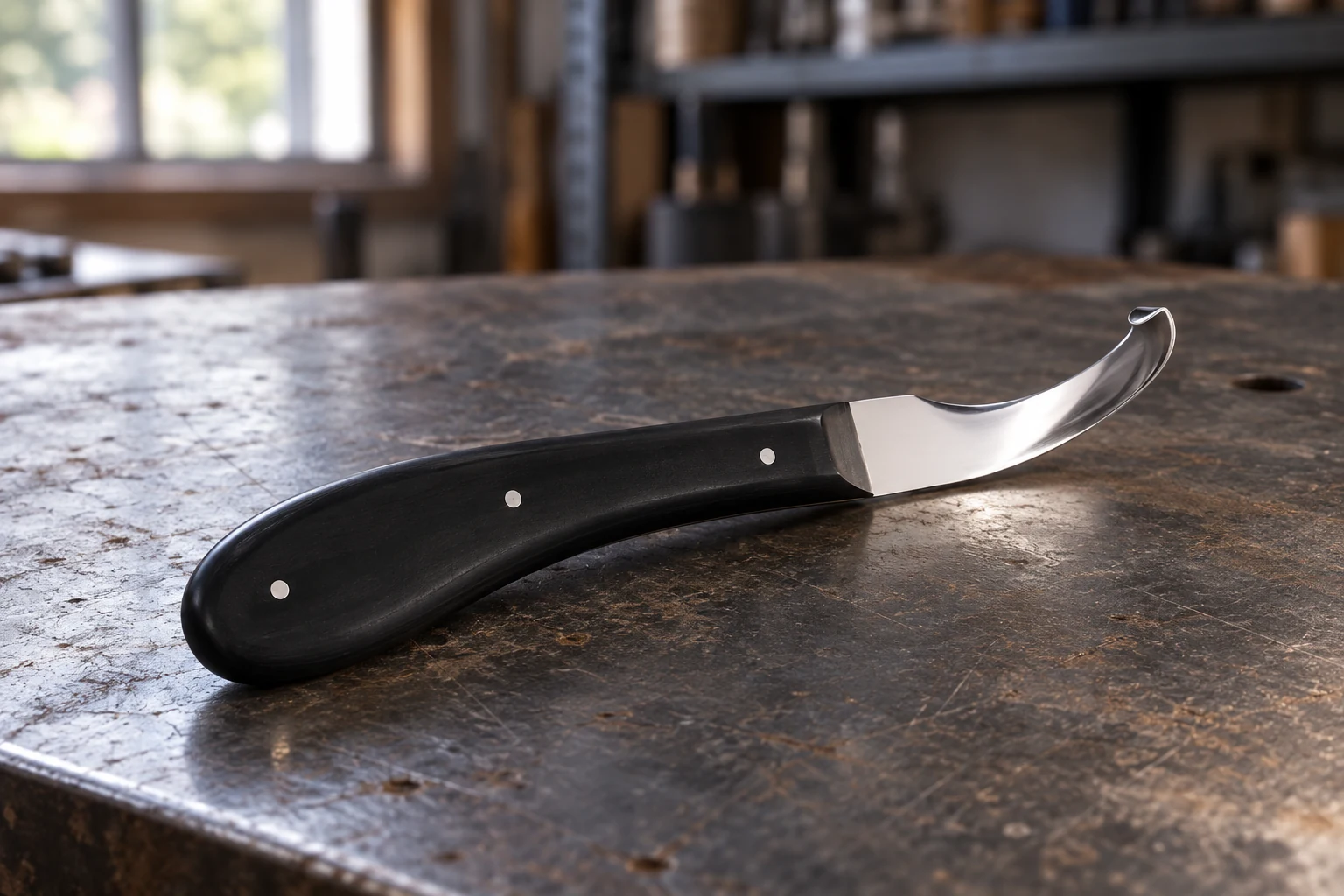
Select the blade format before the finish
Identify the curve, cutting-edge orientation and working blade size your customers need. A similar handle does not make two knives the same. Keep individual knives and multi-piece sets separate in the shortlist, with a reference for every included tool.
Blade shape
Curve, width and tip profile.
Orientation
Selected left, right or other listed configuration.
Set contents
Exact tools and quantities in the retail unit.
Put the blade and handle on one reference
Record blade length and width, then add the handle dimensions and connection details. Mark the measurement points on a photograph or drawing. For a set, check each component separately rather than using a single overall size for the whole assortment.
Working blade
Length, width and the selected curve.
Handle
Shape, dimensions and material requirement.
Connection
The approved blade-to-handle arrangement.
Confirm handedness on the actual sample
Use a clear view of the cutting edge to confirm the requested orientation. Naming conventions alone can lead to a wrong assortment. Keep the approved sample or drawing with each stock code so left and right variants remain identifiable through packing and repeat orders.
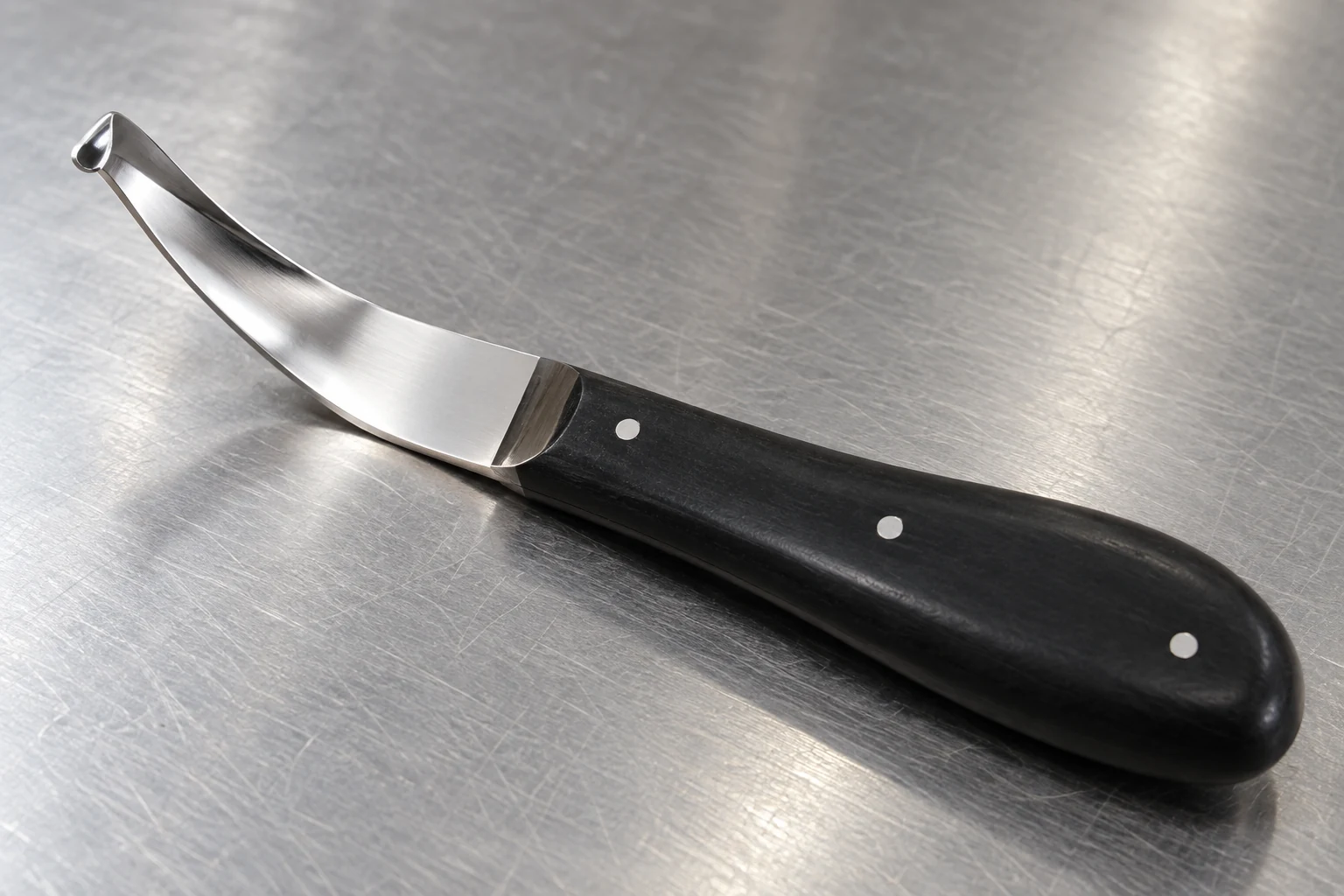
Agree the sample inspection scope
Review the blade profile, finished edge, handle and attachment against the agreed model. Define any material or performance evidence required for your market before ordering. General listing descriptions are not a substitute for model-specific documentation or an agreed evaluation.
Blade
Profile, orientation and the approved edge condition.
Handle
Surface condition and attachment.
Record
Sample identity and the requested supporting evidence.
Review brand changes without losing identification
Send artwork for the handle, label or packaging and tell us which details must remain unchanged. A new blade profile requires a separate review from adding a logo. We can discuss sample arrangements and order conditions after the proposed scope is clear.
Marking
Artwork, location and appearance.
Product change
A marked blade or handle reference.
Quantity split
Separate each model and orientation.
Keep blades protected and sets complete
Agree a blade guard, sleeve or other suitable protection for the selected knife. For a kit, list every component and its position in the pack. Approve both the product and packing reference so the set delivered to your warehouse matches the set sold to your customer.
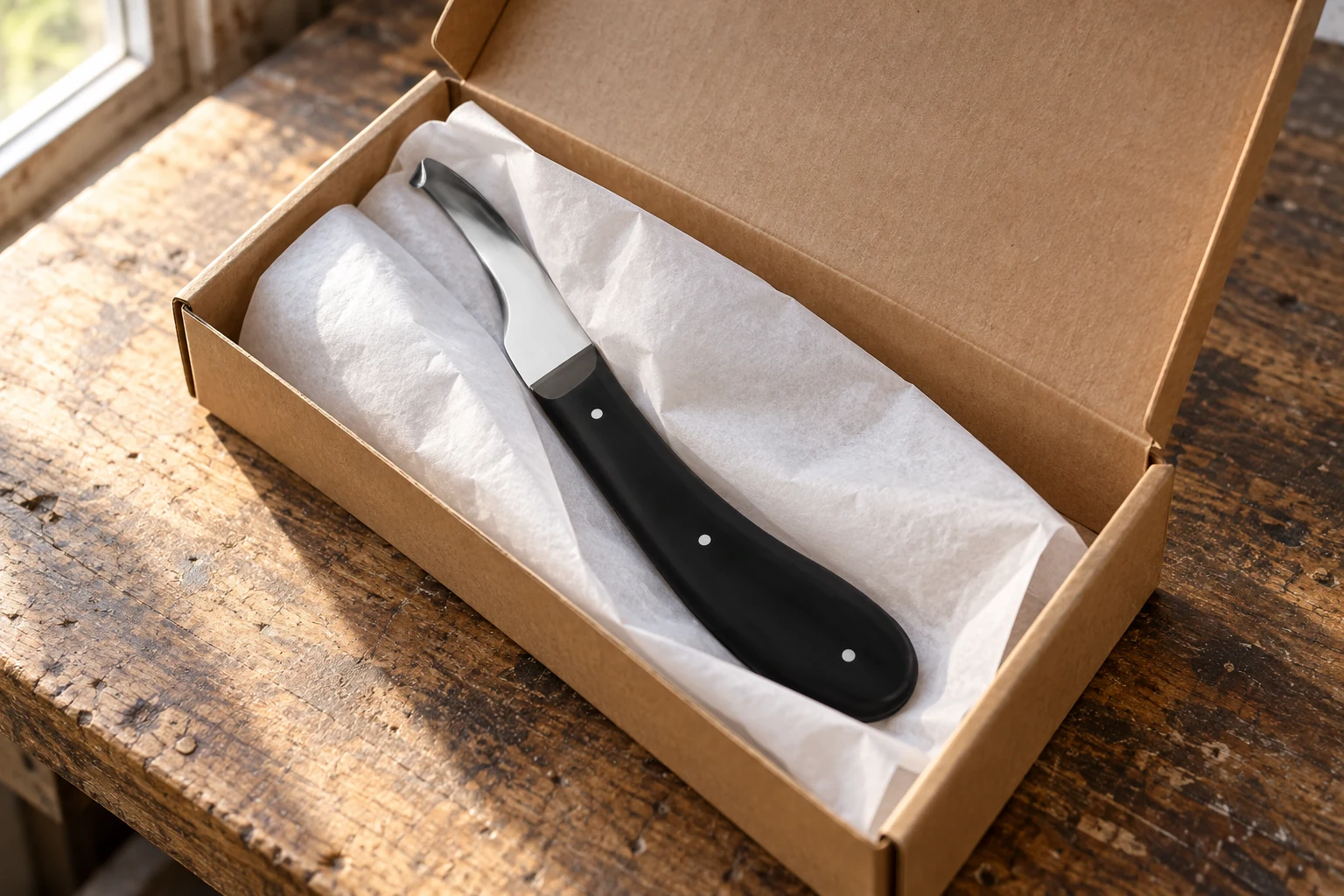
Carry the approved version into repeat orders
Retain the knife reference, orientation, material requirements and packing record. Confirm changes to handles, labels or set contents before the next order. Sample availability, minimum quantities and timing should be reviewed for the actual model mix rather than assumed across the entire tool range.
Identify
A reference for each knife.
Approve
Product details and protected packing.
Repeat
The same configuration or a documented change.
Explore individual knives and tool sets
Use the product references below to prepare a shortlist. The wider farrier guide helps organize mixed tool orders, while rasp and nipper pages cover their own specifications. Keep the quantity for each knife visible even when you are planning a larger kit.
Send your hoof knife selection
Share model links, blade orientation, handle requirements and quantities. For a set, include the complete contents list and preferred presentation.