

Saddlery Hardware from China for Wholesale and Custom Review
Source saddlery hardware from China with a clear drawing and strap reference. We review selected buckles and metal fittings for wholesale orders and custom projects. Start with the part's function and dimensions, then agree material, finish, samples and packing for your tack or leather-goods range.
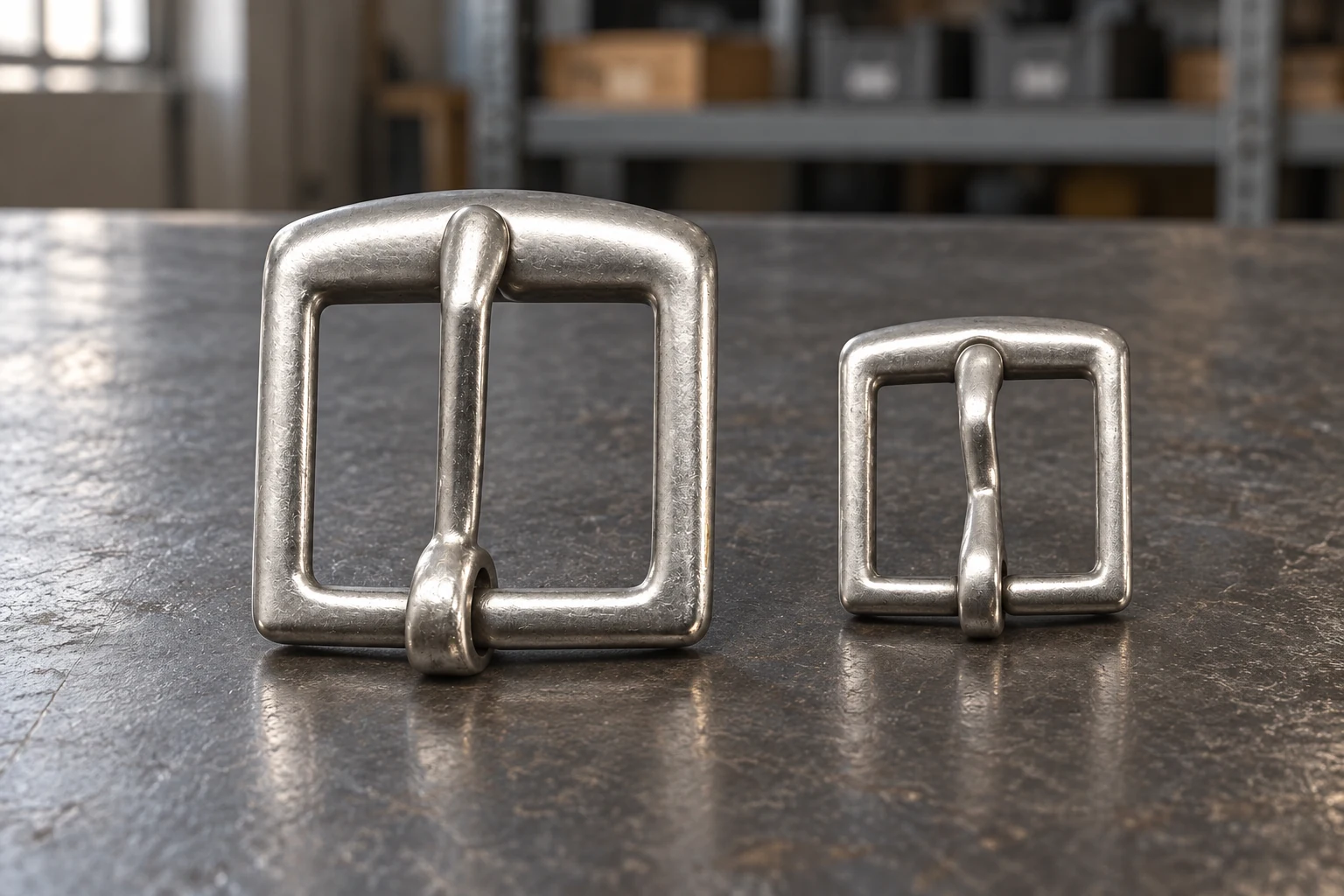
Select the fitting by its construction
Keep buckle frames, tongues, rollers and other fitting details visible in the reference. Similar outlines can hide different clearances or attachment arrangements. Our listed range includes several buckle sizes and roller patterns, so choose the specific model before comparing finishes.
Frame
Shape, section and usable opening.
Tongue
Position, length and connection.
Roller
Selected construction and movement where fitted.
Match the opening to the actual strap
State the strap width and thickness and show how it passes through the fitting. A nominal buckle size does not describe every usable clearance. Confirm the internal opening, bar dimensions and tongue arrangement on the sample with your intended strap material.
Clear opening
Width and height at the working area.
Strap
Actual width, thickness and folded layers.
Attachment
The bar, tongue and connection used in the assembly.
Review edges and movement on the sample
Check the parts that contact the strap, the roller where fitted and the tongue movement. An attractive polish does not replace these checks. Mark any dimension or surface that needs particular attention so the approved sample provides a useful purchasing reference.
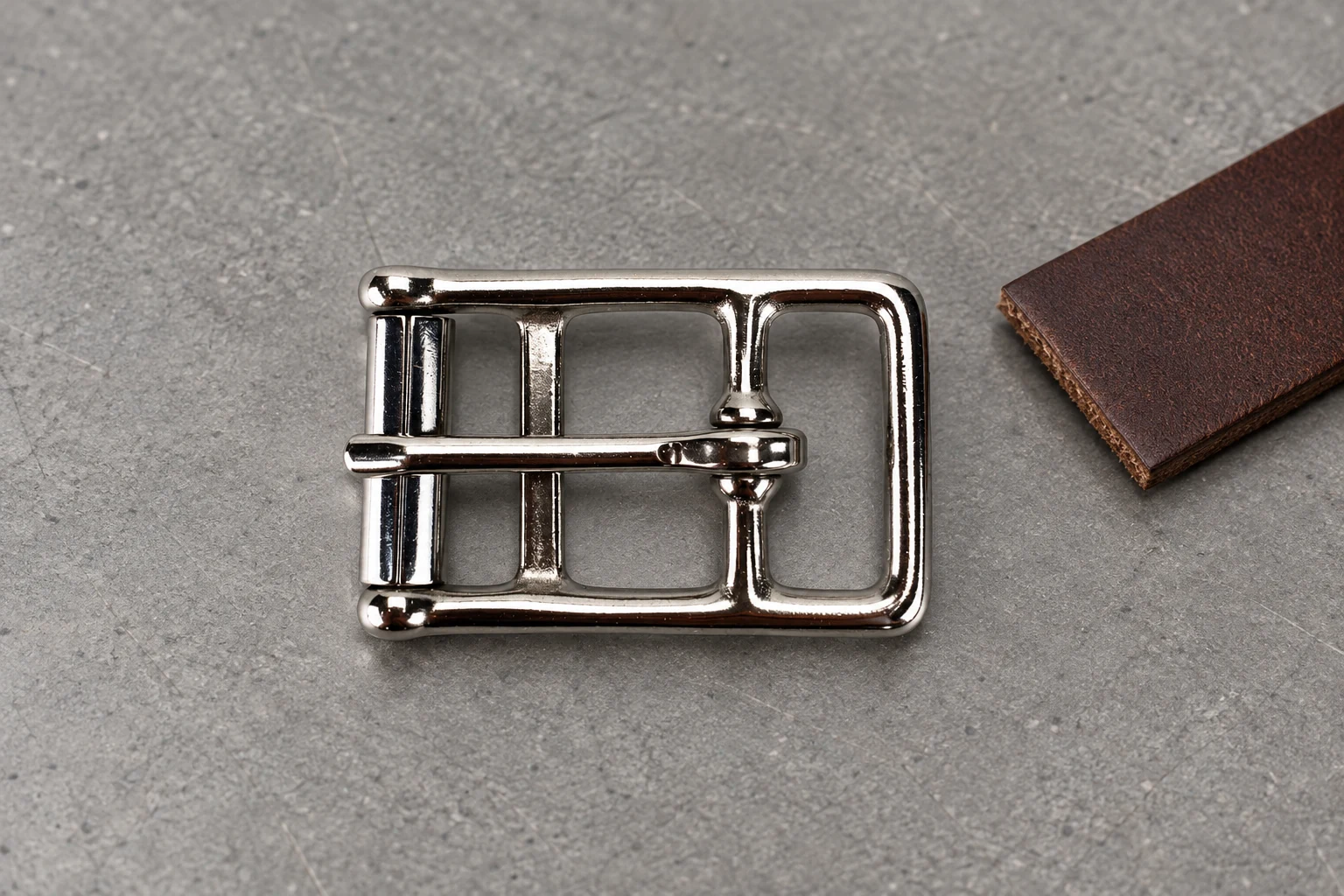
Specify material and finish separately
Identify the base material required for the chosen fitting, then add the finish reference. A silver or brass-colored surface is not enough to define both. Include any material documentation or test requirement with the enquiry, especially where your finished product has a defined performance specification.
Base material
The agreed metal specification.
Surface
Finish, color and visible quality reference.
Evaluation
Your required test method and evidence scope.
Give custom hardware a complete drawing
Send dimensions, tolerances where needed and the intended assembly. Mark changes from an existing fitting and include estimated quantities. We can review the feasible production approach and any tooling or sampling work before you treat the design as ready for ordering.
Drawing
Dimensions, units and revision number.
Application
How the fitting connects to your product.
Project scope
Quantities, marking and proposed changes.
Separate sizes and protect the finish
Use a clear model and size label for every inner pack. Keep small parts counted and protect finished surfaces from rubbing during shipment. If your assembly needs a matched set of fittings, approve the set contents and quantities together with the packing method.
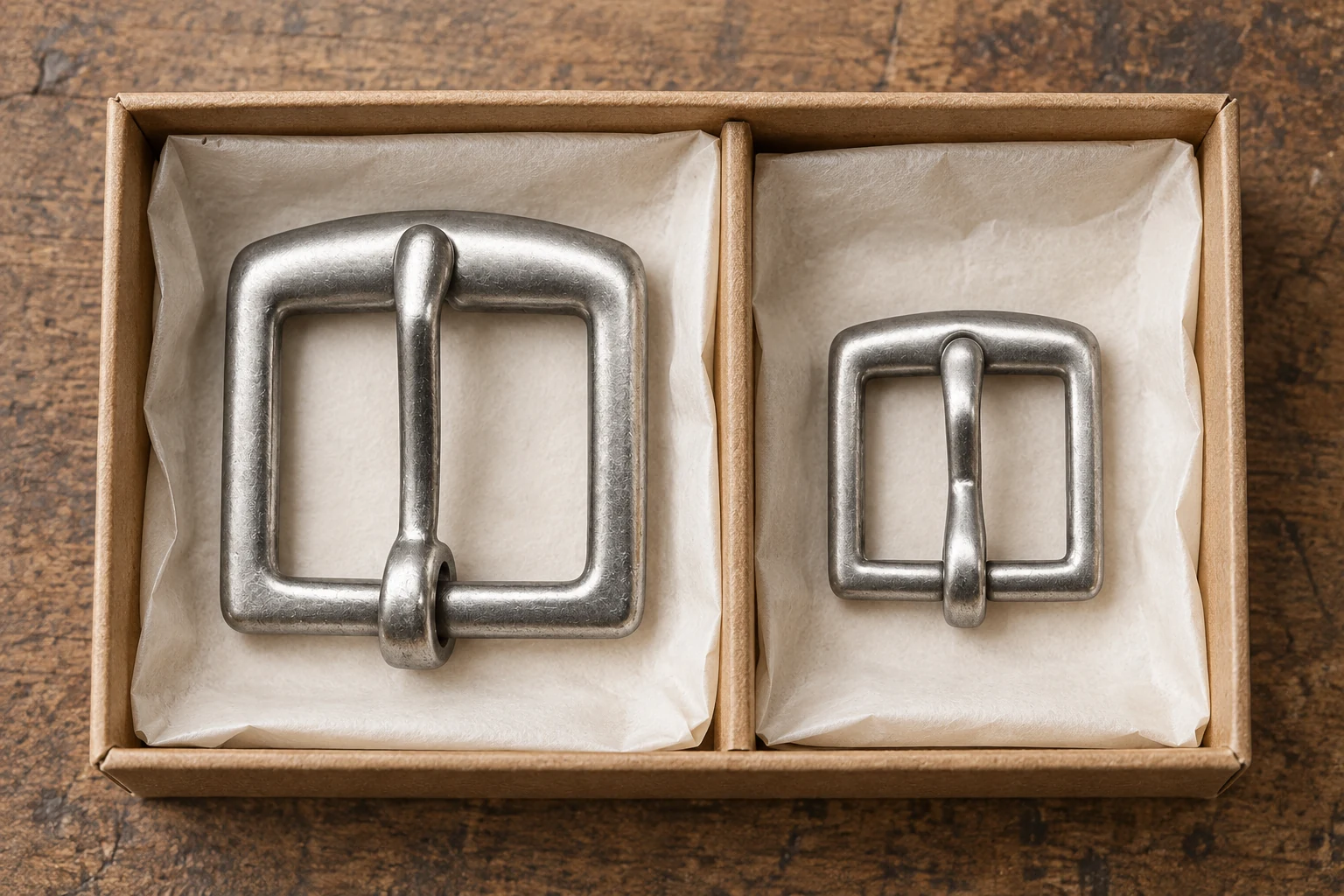
Approve one version for production
Keep the drawing, sample reference, material, finish and packing details together. Confirm tooling arrangements and commercial conditions for the specific design. For reorders, identify any changes to strap thickness or assembly, because those can affect fit even when the buckle name stays the same.
Confirm fit
Review with the intended strap or assembly.
Approve finish
Keep a physical appearance reference.
Control changes
Record the replacement drawing or component version.
Start with a model or a marked drawing
The hardware references below can help you identify an existing starting point. If the part needs different clearances, a revised tongue or another structural change, send a drawing. We can then review the request as a defined hardware project.
Send your fitting and strap reference
Share a model link or drawing, strap dimensions, material, finish and quantities. Include the inspection or test requirements your finished product needs.