

More than 20 years of horseshoe manufacturing
From Product Reference to Finished Horseshoe
A horseshoe production route starts with the selected material and an agreed product reference. Shape, section, nail holes, clips and finish need to work together. We review the drawing or sample and the features to check before planning a standard or custom order.
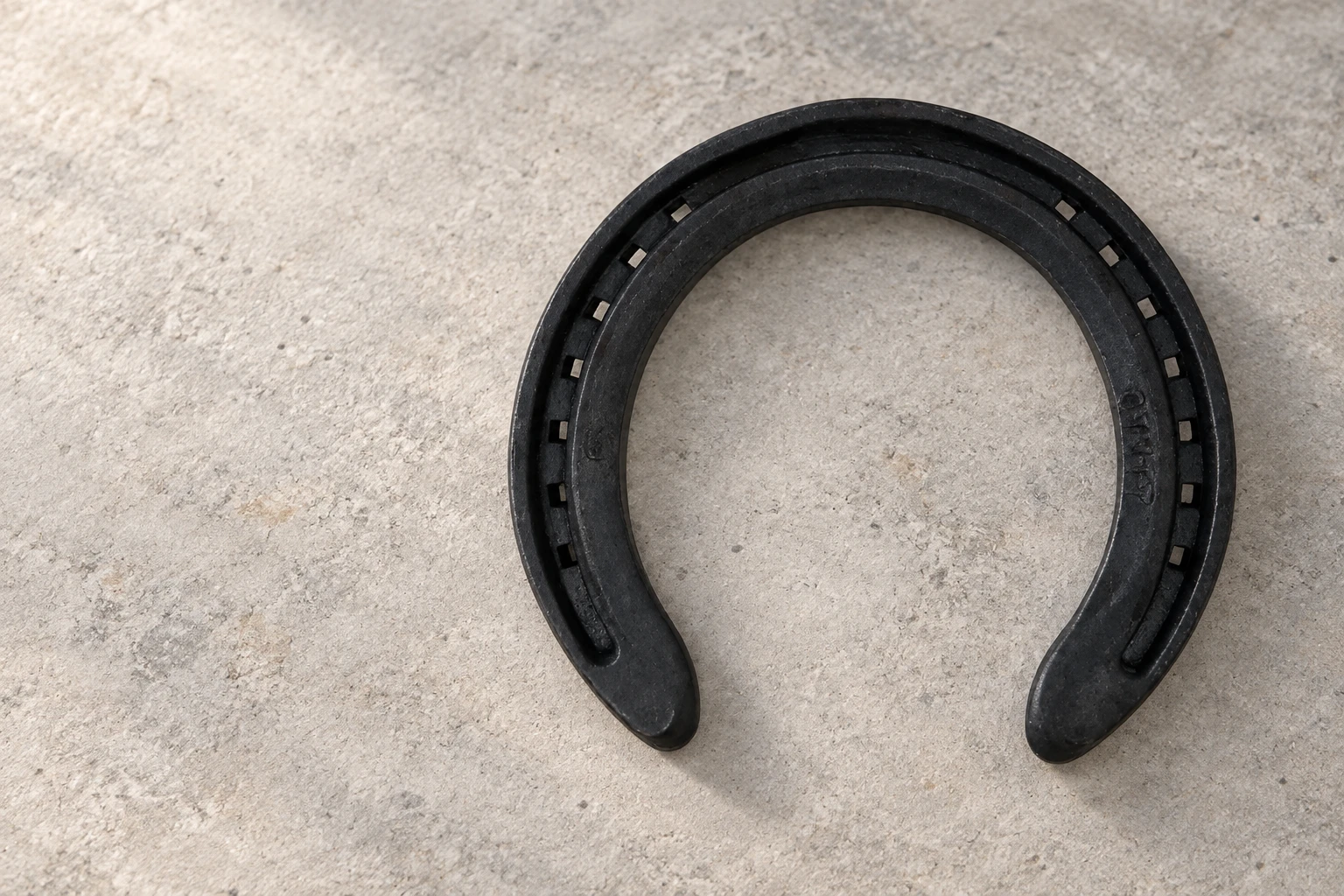
From reference to production
Connect the forming route to the agreed shape
For a forged model, the tooling and forming stage need to follow the product geometry. A finished reference helps keep the outline, section and nail-hole requirements visible during the review.
For your enquiry, identify the features that must stay unchanged and the adjustments you need. We confirm the proposed route before tooling or sample work begins.
Review tooling and design changesProcess follows material
Different horseshoes need different production routes
On a small screen, swipe the table sideways to see all columns.
| Product family | Typical manufacturing focus | Critical definition |
|---|---|---|
| Steel horseshoes | Material preparation, heating, forging or forming, trimming and finishing | Section, geometry, nail holes, clips and surface |
| Aluminum horseshoes | Alloy control, forging, feature forming and finishing | Weight, section, front/hind geometry and finish |
| Copper horseshoes | Material-specific forming and surface treatment | Composition, geometry and intended appearance |
| Rubber and composite horseshoes | Compound or material preparation, molding and finishing | Structure, size, molded features and color |
Factory sequence
Every order moves from definition to repeatable output
Define
Confirm the model, drawing, material, sizes, features and packing.
Prepare
Arrange material, tooling, production files and sample requirements.
Produce
Run the material-specific forming and secondary operations.
Release
Inspect product identity, critical features, finish, quantity and packing.
Manufacturing value
Keep manufacturing decisions tied to the product
The finished shoe depends on more than its material name. Section, outline, nail-hole geometry, clips and finish must match the approved reference. Agree the features that matter to your range so production and inspection work from the same requirements.
Custom production
Review the design before choosing the production route
Send the drawing, physical sample or proposed change for review. The required material, forming route, tooling, sample and inspection points are confirmed for that project. Minimum quantities are quoted by model and process.
Capacity planning
Plan production after the specification is clear
For a new range, allow time to resolve drawing and sample comments before fixing the bulk schedule. For replenishment, send the approved reference and size quantities so we can confirm the current production window.
Know which reference each stage uses
On a small screen, swipe the table sideways to see all columns.
| Stage | Reference to agree | Buyer decision |
|---|---|---|
| Product definition | Model, drawing or sample | Features to keep or change |
| Sample review | Recorded dimensions and comments | Approve or request a revision |
| Production review | Approved version and order quantities | Inspection priorities |
| Packing | Variant list and packing instructions | Labels and selling units |
For a factory review, request details of the proposed manufacturing stages for your selected product, including any specialist processing arrangements.
Factory review
Match your design to the right process
Send the material, model or drawing, size range, required features and quantity.