
A stirrup range can look consistent in a catalogue while the details buyers need for repeat orders remain unclear: which dimensions apply to each model, which shank and tread colors can be combined, and whether a quoted unit means one stirrup or a pair. Confirming those details before a trial order helps retailers and distributors compare supplier offers on the same basis.
This guide is a sourcing checklist, not riding or safety advice. A product name or photograph does not establish a performance rating, certification, fit or current availability. Ask the supplier to confirm the facts that matter to your market and intended use.
1. Turn the catalogue entry into a variant matrix
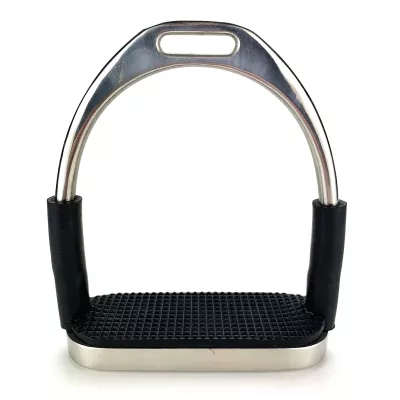
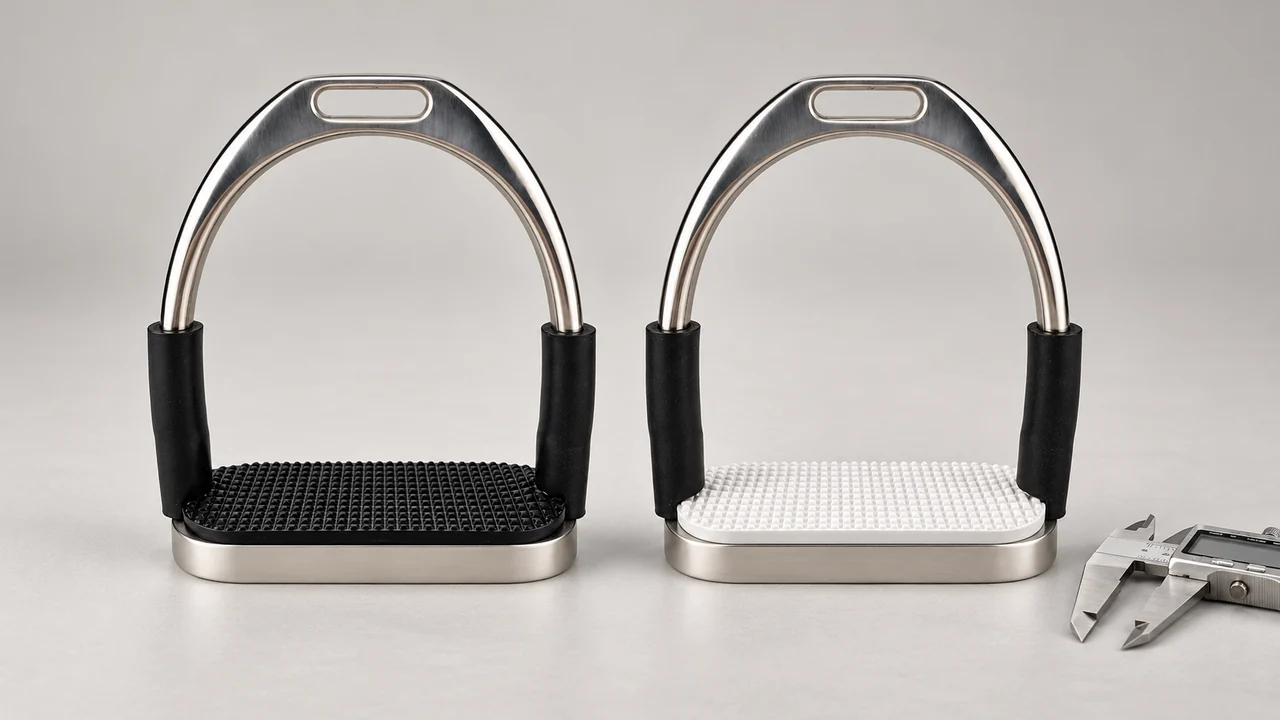
Start from a specific model and write down every variant that could change a buyer's SKU. RELIA's Model 50038 flexi stirrup page currently lists sizes from 4-1/4 to 5 inches, shank colors of silver, grey or black, and black or white tread pads. Treat that as the published selection to review, not proof that every possible combination is available from stock.
Build a row for each combination you want quoted. Record the model, size, shank color, tread color, requested quantity and quantity unit. Ask the supplier to confirm which combinations can be supplied, whether any are made to order, and whether the selected colors and dimensions refer to the same current version.
2. Request the dimensions and component details you will publish
Ask for a dimensioned drawing or written specification for the exact model and size. Confirm the measurement points and units for the opening, tread or footbed, and any other dimension your customers need. If a detail is not shown, mark it as “supplier confirmation required” rather than estimating it from a photograph.
Clarify the construction and material description for each component, including the shank, tread or pad, and any flexible connection. Ask the supplier to identify any material grade, test report, declaration or care instruction that is available for the version being quoted. Do not convert a general description such as “stainless steel” into a specific grade or compliance claim unless the supplier provides evidence for that item.
3. Agree a sample review before approving repeat supply
If you need a sample, define what your team will compare: model and size marking, left-right pair consistency, finish, color match, component assembly and the dimensions on the approved drawing. Photograph the reviewed sample beside the drawing or specification and record the date and version so the approved reference is clear.
For any safety-related function or claim, request the relevant instructions and evidence for the exact assembly and sales market. Have qualified people assess product suitability and applicable requirements; a visual sample check is not a substitute for testing or professional evaluation. Agree in writing how a sample approval relates to later production and what happens if a delivered batch differs from the approved reference.
4. Make the commercial unit and packing explicit
State whether your requested quantity is in individual stirrups, pairs, sets or cartons. Ask how the supplier packs each variant, whether colors are mixed within a carton, and what labels or product references appear on the inner and outer packaging. If the quotation uses a different unit from your inventory system, ask for the conversion before comparing prices.
Include the destination country and city or port, requested delivery term, target dispatch window and required documents. Ask the supplier to confirm current availability, production timing, sample timing, freight and any order minimum in writing for the exact mix. A published indicative lead time is not a delivery commitment for a new configuration or destination.
5. Compare supplier replies line by line
Put each response into the same table. Separate confirmed facts from estimates and unanswered questions. Compare like with like across model, size, colors, material description, quantity unit, packing, sample approval, price basis, freight, documents and timing. If a supplier proposes a substitute, list it as a separate option and request its own drawing or sample rather than merging it into the original row.
Wholesale stirrup RFQ checklist
- Model or product-page link:
- Quantity by size and color combination:
- Quantity unit: individual pieces, pairs, sets or cartons:
- Required dimensions, drawing revision and units:
- Material description required for each component:
- Requested samples and written approval criteria:
- Packaging, labels and carton-mix requirements:
- Destination and requested delivery term:
- Documents or market-specific declarations required:
- Target dispatch window and questions needing confirmation:
Request a quote for a confirmed configuration
Open the RELIA Model 50038 product page and use its inquiry option. Include your variant matrix, quantity unit, destination and any drawing or sample reference. RELIA can confirm the details that apply to your selected request before a quotation is prepared. You can also reach the team at [email protected] or on WhatsApp at +1 404 203 0971.